At a glance
- All-on-4 is a full arch rehabilitation technique in which a complete set of fixed replacement teeth is supported by only four implants per jaw.
- By angling the posterior implants, surgeons can engage denser sections of available bone and achieve greater stability, even in patients who have experienced significant bone resorption after years of tooth loss.
- On the day of surgery, a temporary fixed bridge is usually attached to the four implants, meaning patients leave the clinic with a functional set of teeth rather than going without teeth during healing.
- All-on-4 is particularly suited to patients wearing loose or uncomfortable full dentures who want a fixed, stable alternative that does not require removal at night or adhesive creams during the day.
- Although the prosthesis is fixed, it must still be cleaned thoroughly every day using specific brushes and floss threaders designed to clean underneath the bridge where it meets the gum.
What Is the All-on-4 Concept
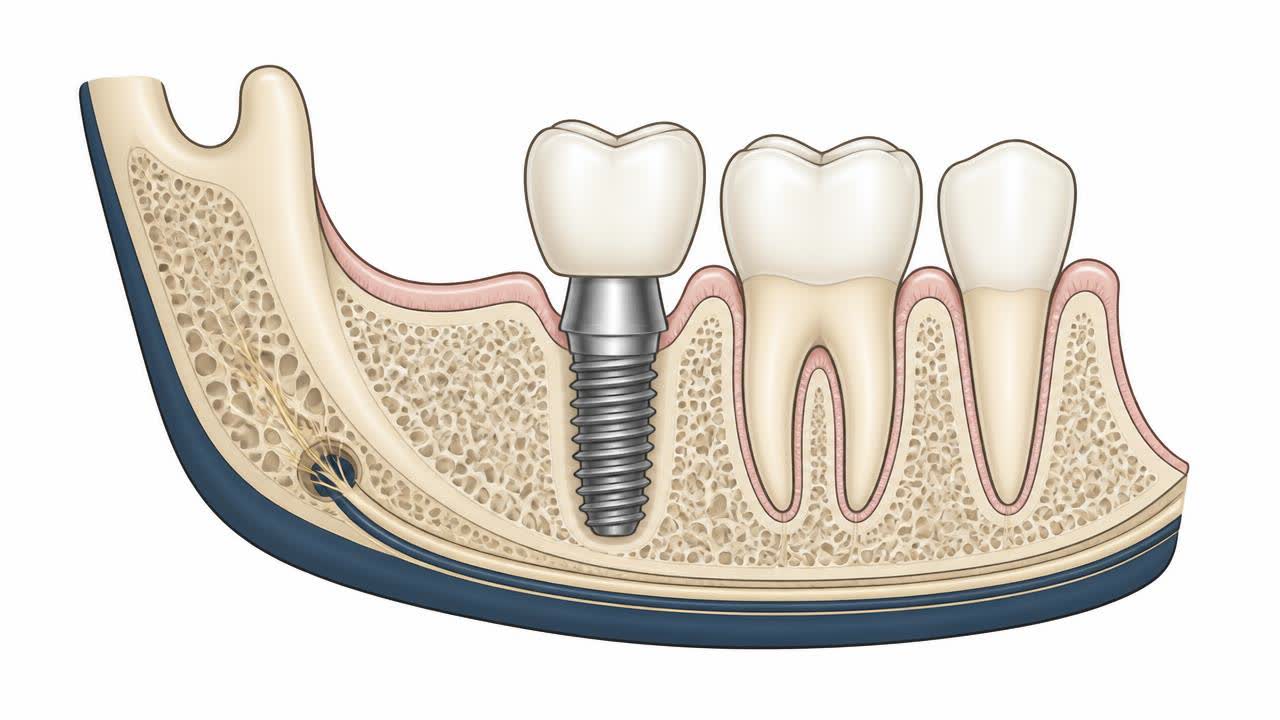
All-on-4 is a full arch rehabilitation technique in which a complete set of fixed replacement teeth is supported by only four implants per jaw. Two implants are placed vertically towards the front, and two are angled towards the back, cleverly avoiding areas of thin bone such as the sinus cavities in the upper jaw.
This design was developed specifically for patients who have lost most or all of their teeth, or whose remaining teeth are failing due to advanced gum disease or extensive decay. It offers a fixed, non-removable alternative to traditional dentures without requiring bone grafting in most cases.
Why Only Four Implants
By angling the posterior implants, surgeons can engage denser sections of available bone and achieve greater stability, even in patients who have experienced significant bone resorption after years of tooth loss. This angled placement also allows a shorter implant to still provide strong support.
The result is that patients who might otherwise have been told they need extensive bone grafting can often proceed directly to implant placement, considerably shortening overall treatment time and reducing the number of surgical interventions required.
The Fixed Bridge and Same-Day Teeth
On the day of surgery, a temporary fixed bridge is usually attached to the four implants, meaning patients leave the clinic with a functional set of teeth rather than going without teeth during healing. This temporary bridge is lighter and allows the implants to integrate undisturbed.
After a healing period of three to six months, the temporary bridge is replaced with a final, more durable prosthesis made from materials such as zirconia or a reinforced acrylic with a titanium framework, custom designed for aesthetics, comfort, and long-term function.
Who Benefits Most
All-on-4 is particularly suited to patients wearing loose or uncomfortable full dentures who want a fixed, stable alternative that does not require removal at night or adhesive creams during the day. It is also appropriate for patients whose remaining natural teeth are beyond saving due to periodontal disease.
Older patients and those with moderate bone loss often benefit the most, since the technique is specifically engineered to work with reduced bone volume. A thorough CBCT assessment determines suitability and the precise implant positions before any surgery is scheduled.
Maintenance and Longevity
Although the prosthesis is fixed, it must still be cleaned thoroughly every day using specific brushes and floss threaders designed to clean underneath the bridge where it meets the gum. Neglecting this can lead to gum inflammation around the implants.
With diligent home care and six-monthly professional reviews, All-on-4 restorations can function reliably for many years. The prosthetic teeth themselves may occasionally need adjustment or replacement over a decade or more, but the implants supporting them are designed to remain in place long term.
Questions patients ask us
- Do I really get teeth in a single day?
- Yes, in most cases a temporary fixed bridge is attached on the same day as implant surgery, so you are never left without teeth. The final, more durable bridge is fitted later once the implants have fully integrated with the bone.
- Is All-on-4 the same as All-on-6?
- Both are full arch fixed solutions, but All-on-6 uses six implants instead of four, offering additional support that some dentists prefer for patients with higher biting forces or specific bone conditions. Your dentist will recommend the option best suited to your jaw.
- Can I eat normally with All-on-4 implants?
- After the initial healing period, most patients can enjoy a normal, varied diet including firmer foods. During the temporary bridge phase, a softer diet is recommended to protect the healing implants while they integrate with the bone.
- Is this suitable for someone who has worn dentures for years?
- Yes, All-on-4 is frequently chosen by long-term denture wearers who are frustrated with slipping, discomfort, or reduced chewing ability. It is worth noting that bone volume may need reassessment, as prolonged denture use can accelerate bone loss.
Sources and further reading
Guidance from professional and public health bodies. Clinical decisions here are made on your own examination and radiographs.
- 1.ITI Treatment Guide series and consensus statements — International Team for Implantology (ITI)
- 2.Consensus reports on implant dentistry — European Association for Osseointegration
- 3.Prosthodontic and edentulous-care patient guidance — American College of Prosthodontists
- 4.Oral health — fact sheet and global status report — World Health Organization
- 5.Policy statements and oral health definitions — FDI World Dental Federation
- 6.Dental health — conditions, treatments and patient guidance — NHS (UK)
- 7.Systematic reviews of oral and dental interventions — Cochrane Oral Health
- 8.Regulatory framework and dental education standards in India — Dental Council of India
When to see us
Get examined without waiting if any of the following applies to you:
- Pain, looseness or pus around an implant or a fixed bridge
- A crown, bridge or denture that has fractured or come away
- Gum swelling that keeps returning around the same restoration
Get a written plan and cost before you commit
If this is what you are dealing with, the next step is a consultation with radiographs — implants & missing teeth cases are seen by the specialist who handles that field. You get a written plan and staged cost before anything begins.
reception@dramitsharmahospital.comThis article is general education and does not replace an in-person examination, radiographs or a diagnosis by a qualified dentist.
Clinical terms in this article
Related in Implants & Missing Teeth
Missing Teeth: Comparing Dentures, Bridges and Implant Options
What happens if a missing tooth is left unreplaced, and how dentures, bridges and implants compare on comfort, longevity and bone health.
Dental Implants: A Complete Guide
How titanium implants replace missing teeth, who qualifies, the step-by-step timeline and how long they last.
Full Mouth Rehabilitation
Rebuilding a worn, collapsed or heavily damaged dentition with a sequenced, whole-mouth treatment plan.
Peri-Implant Mucositis Symptoms and Early Intervention
Peri-implant mucositis is a plaque-induced, reversible inflammatory lesion affecting the soft tissues surrounding a dental implant without bone loss. Prompt professional debridement, risk-factor modification, and meticulous biofilm control prevent progression to irreversible peri-implantitis.
Peri-Implantitis Symptoms Bone Loss and Implant Salvage
Peri-implantitis is an inflammatory condition causing progressive marginal bone loss around dental implants. Early detection, thorough decontamination, and advanced surgical salvage techniques can arrest bone destruction, resolve inflammation, and preserve implant stability.
Root Canal Retreatment vs Tooth Extraction and Implant
This clinical guide evaluates root canal retreatment versus tooth extraction and dental implant placement. Learn about biological tooth preservation, anatomical considerations, procedural steps, longevity, recovery expectations, and diagnostic criteria to make an informed oral healthcare decision.