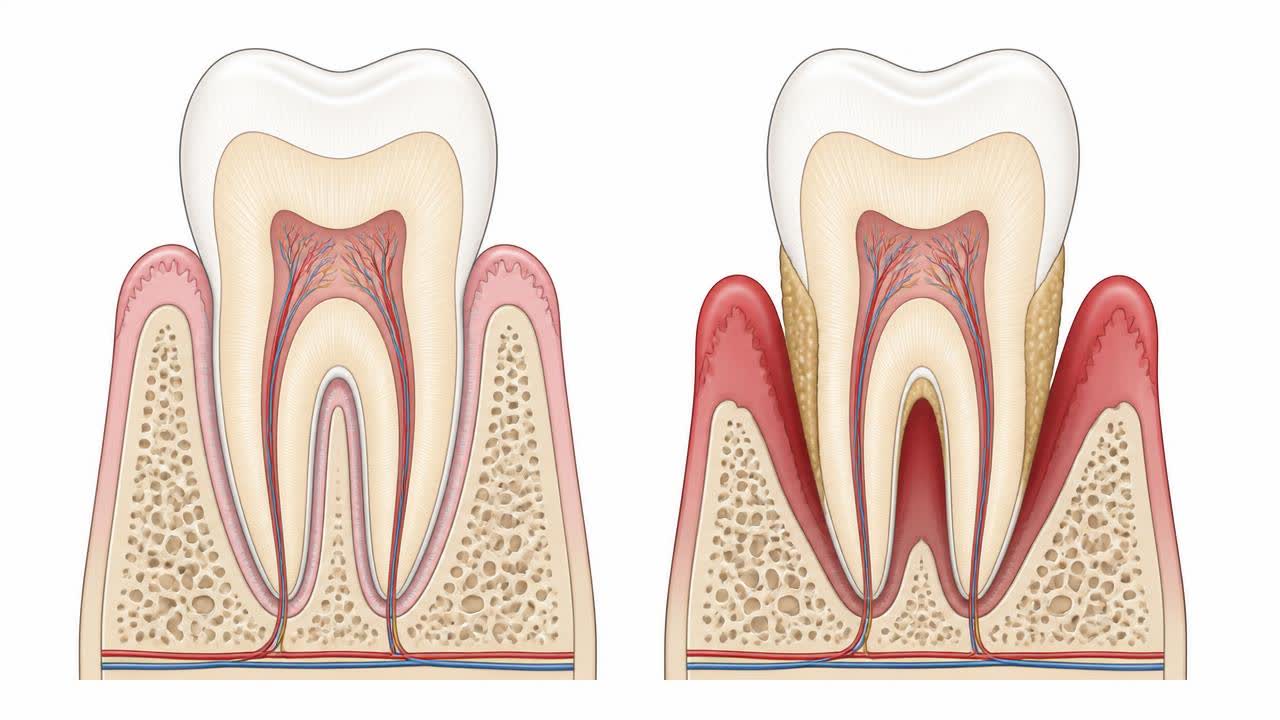
At a glance
- Aggressive periodontitis is a severe, rapidly progressing form of gum disease that can affect young, otherwise healthy individuals.
- Common signs include rapid recession of the gums, loose teeth, or sudden gaps appearing between teeth that weren't there before.
- Treating aggressive periodontitis requires a highly structured and intensive approach.
- Because this form of periodontitis is so aggressive, long-term maintenance is absolutely vital.
- We understand that a diagnosis of aggressive periodontitis can be concerning, especially at a young age.
What is Aggressive Periodontitis?
Aggressive periodontitis is a severe, rapidly progressing form of gum disease that can affect young, otherwise healthy individuals. Unlike chronic periodontitis, which usually develops over many years, this aggressive form can cause significant loss of bone and tissue support in a remarkably short period. It is often linked to specific types of bacteria and can have a strong genetic component within families.
At Dr. Amit Sharma Super Speciality Dental Hospital, we take this diagnosis very seriously. We provide comprehensive, intensive care, focusing on stopping the disease process as quickly as possible. Because this form of gum disease can escalate so rapidly, early detection through regular professional dental check-ups is the single most important factor in saving your natural teeth and preventing life-long damage.
Identifying the Signs Early
Common signs include rapid recession of the gums, loose teeth, or sudden gaps appearing between teeth that weren't there before. Some patients may also experience persistent bad breath, bleeding gums during brushing, or a general feeling of instability when biting. Because these symptoms can appear quite suddenly, any change in your gum health should be evaluated immediately by our professional dental team.
We offer a thorough periodontal assessment to identify the presence of this condition. Our diagnostic process includes digital X-rays to check for bone loss and detailed probing to measure gum pockets. If you notice any of these signs, do not wait—early diagnosis is our best defence against this aggressive disease. Contact us today for a consultation if you are concerned about your gum health.
Our Intensive Treatment Approach
Treating aggressive periodontitis requires a highly structured and intensive approach. This typically involves deep professional cleaning, known as scaling and root planning, combined with antibiotic therapy to target the specific, highly destructive bacteria involved. In more advanced cases, surgical intervention or regenerative therapy may be necessary to restore bone support and stabilize the teeth effectively.
Our team provides this care in a supportive, professional environment, ensuring you receive the highest standard of treatment. We also perform bacterial testing in some cases to tailor the antibiotics precisely to the pathogens in your mouth. By combining the latest evidence-based treatments with personal care, we strive to achieve the best possible outcomes for every patient, saving your teeth and restoring your gum health.
A Partner in Your Dental Health
We understand that a diagnosis of aggressive periodontitis can be concerning, especially at a young age. Our team is here to provide not just the best possible clinical care, but also the information and support you need to feel confident and empowered in your treatment journey. We believe in providing clear, honest communication and working closely with you to protect your smile.
If you have concerns about the speed of your gum health changes or have a family history of severe gum disease, we encourage you to get in touch. We offer comprehensive, expert-led care tailored to your specific needs. Let us help you take control, preserve your natural teeth, and maintain your beautiful smile. Contact our clinic today to book an expert assessment.
The Importance of Lifetime Maintenance
Because this form of periodontitis is so aggressive, long-term maintenance is absolutely vital. Following your active treatment, you will need to adhere to a frequent, regular periodontal check-up schedule, often every three months. These appointments are essential to monitor your progress, re-assess your pocket depths, and ensure that the bacterial levels remain low, preventing any chance of the disease returning and damaging your teeth.
Your home hygiene is equally important. We will work with you to develop a routine that ensures every surface of your teeth is kept immaculately clean. By taking these steps and staying consistent with your follow-up care, you provide your gums the best opportunity to heal, strengthen, and remain stable for the rest of your life. We are here to support you at every stage of this journey.
Questions patients ask us
- Why is it called 'aggressive' periodontitis?
- It is called aggressive because it causes rapid loss of the bone and soft tissue that support your teeth. Unlike typical gum disease, which develops slowly, this form can cause significant damage in a very short amount of time, making early and intensive intervention critical.
- Can this disease be cured?
- While there is no permanent 'cure' that guarantees it won't return, we can successfully halt the disease's progression through intensive professional treatment and life-long maintenance. The goal is to save your natural teeth and manage the disease so it no longer causes further damage.
- Is aggressive periodontitis genetic?
- There is evidence that some forms of this condition have a strong genetic component, meaning it may run in families. If you have family members who have lost teeth due to gum disease, it is very important that you get regular, professional periodontal screenings.
- What can I do to help my recovery?
- Your role in your recovery is vital. This includes following our intensive home care routine perfectly, taking all prescribed medications, and never missing your frequent periodontal maintenance visits. Your diligence is the most important factor in keeping your gums healthy and stable.
Sources and further reading
Guidance from professional and public health bodies. Clinical decisions here are made on your own examination and radiographs.
- 1.EFP clinical practice guidelines for periodontitis — European Federation of Periodontology
- 2.Classification of periodontal and peri-implant diseases — American Academy of Periodontology
- 3.Prevention and treatment of periodontal diseases in practice — Scottish Dental Clinical Effectiveness Programme
- 4.Oral health — fact sheet and global status report — World Health Organization
- 5.Policy statements and oral health definitions — FDI World Dental Federation
- 6.Dental health — conditions, treatments and patient guidance — NHS (UK)
- 7.Systematic reviews of oral and dental interventions — Cochrane Oral Health
- 8.Regulatory framework and dental education standards in India — Dental Council of India
When to see us
Get examined without waiting if any of the following applies to you:
- Gums that bleed without provocation, or bleeding that has become heavier
- Teeth that feel loose, are drifting, or gaps that are opening up
- Persistent bad breath or taste, gum abscesses, or pus on pressing the gum
Get a written plan and cost before you commit
If this is what you are dealing with, the next step is a consultation with radiographs — gums & prevention cases are seen by the specialist who handles that field. You get a written plan and staged cost before anything begins.
reception@dramitsharmahospital.comThis article is general education and does not replace an in-person examination, radiographs or a diagnosis by a qualified dentist.
Clinical terms in this article
Related in Gums & Prevention
Bleeding Gums and Gum Disease: A Complete Guide
What bleeding gums usually mean, how gingivitis progresses into periodontal disease, and the treatment path from scaling to gum surgery.
Gum Disease: Detection and Treatment
From reversible gingivitis to periodontitis, the warning signs, staged treatment and the link to overall health.
Preventive Dentistry and Home Care
The routine that prevents most dental disease: brushing technique, interdental cleaning, diet and recall visits.
Chronic Bad Breath Caused by Gum Infection
Chronic bad breath, or halitosis, is frequently driven by underlying gum disease. Subgingival bacteria produce volatile sulphur compounds within periodontal pockets. Effective resolution requires professional periodontal debridement, targeted biofilm disruption, and meticulous daily interdental hygiene rather than cosmetic masking.
Loose Permanent Teeth from Advanced Periodontal Disease
Loose teeth from advanced gum disease occur when severe chronic inflammation destroys the supporting alveolar bone and periodontal ligament. With timely periodontal therapy, splinting, and meticulous plaque control, many loose teeth can be stabilised and preserved without extraction.
Furcation Involvement and Bone Loss Between Roots
Furcation involvement describes bone loss between the roots of multi-rooted molars caused by advanced periodontal disease. This clinical guide explains its causes, diagnostic staging, surgical and non-surgical therapies, daily maintenance, and red flag symptoms requiring urgent care.