At a glance
- Interproximal Reduction (IPR) is a common and safe orthodontic procedure used to create the necessary space for teeth to move into their ideal positions.
- The primary reason for performing IPR is to resolve crowding.
- The IPR procedure itself is straightforward and usually feels similar to having your teeth flossed or cleaned.
- At Dr.
- The main benefit of IPR is that it allows us to achieve a beautiful, straight smile without needing to extract healthy permanent teeth.
What Is Interproximal Reduction?
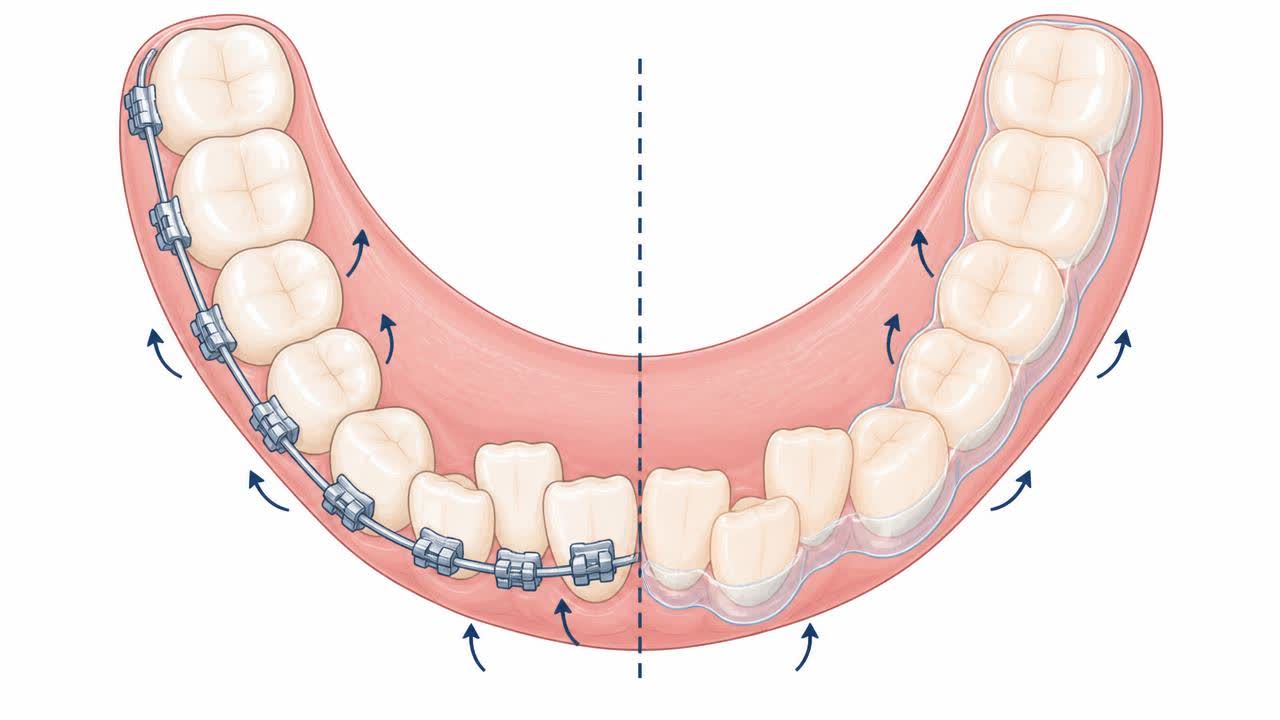
Interproximal Reduction (IPR) is a common and safe orthodontic procedure used to create the necessary space for teeth to move into their ideal positions. During IPR, a dentist carefully removes a minuscule amount of tooth enamel from between two adjacent teeth. This small amount of space allows crowded teeth to shift comfortably without the need for more invasive treatments like tooth extractions.
The process is highly controlled and precise. We only remove the minimum amount of enamel required, typically just fractions of a millimetre, ensuring that the health and strength of your teeth are preserved. This is a very routine part of many clear aligner treatment plans, especially when patients have crowding that needs to be resolved before the teeth can be straightened.
Why Is IPR Needed?
The primary reason for performing IPR is to resolve crowding. When there is not enough room in your dental arch for all your teeth to sit in a straight, healthy line, they often become bunched or rotated. By strategically creating small amounts of space between the teeth, we provide the 'wiggle room' necessary for them to align correctly and function properly.
Additionally, IPR can sometimes be used to improve the contact points between teeth, which helps prevent food from getting trapped between them. It is a targeted approach that aims to achieve maximum aesthetic results while maintaining the integrity of your dental structure. Our team will determine if IPR is necessary for your specific case during the detailed digital planning phase of your treatment.
The IPR Procedure Explained
The IPR procedure itself is straightforward and usually feels similar to having your teeth flossed or cleaned. We use either a fine abrasive strip or a small, precision dental tool to gently polish the sides of the targeted teeth. Because the amount of enamel removed is so minimal—often less than the width of a single hair—anaesthetic is rarely needed.
You might feel some vibration or a slight sensation of pressure while we perform the reduction, but it should not be painful. The entire process takes just a few minutes, and you can return to your normal daily activities immediately afterwards. It is a quick and efficient step that paves the way for your aligners to work effectively and for your teeth to move into their new, aligned positions.
Safety and Tooth Health
At Dr. Amit Sharma Super Speciality Dental Hospital, we prioritise your long-term dental health. The enamel we remove is only a tiny fraction of the total enamel layer on your teeth. Removing this small amount does not increase your risk of tooth decay or sensitivity, provided you maintain a good oral hygiene routine, including daily brushing and interdental cleaning as we recommend.
We take great care to ensure that the surfaces are polished smooth after the reduction, preventing any rough areas that could trap bacteria. Once your teeth have moved into their final, straighter positions, these tiny gaps are naturally closed up, which ensures your bite is secure and your teeth are protected. Your long-term oral health is always our primary concern throughout the entire orthodontic process.
Benefits for Your Smile
The main benefit of IPR is that it allows us to achieve a beautiful, straight smile without needing to extract healthy permanent teeth. By creating just enough space where it is truly needed, we can often avoid more complicated procedures and deliver fantastic results with clear aligners alone. It is a sophisticated way to manage your dental alignment, focusing on efficiency and preserving your natural teeth.
If your treatment plan includes IPR, it means we have carefully calculated exactly where and how much space is needed to give you the best possible outcome. This precision is what makes clear aligner therapy so effective. When you see the final result—a perfectly aligned, healthy, and aesthetic smile—you will appreciate how these small, thoughtful steps came together to make your transformation a reality.
Questions patients ask us
- Does IPR hurt?
- No, IPR is generally not painful. You might feel some vibration or pressure as the instrument is used, but most patients find the experience very comfortable and do not require any local anaesthetic for the procedure.
- Will IPR weaken my teeth?
- No, when performed correctly, IPR removes only a tiny, insignificant amount of enamel that does not affect the strength or health of your teeth. We always ensure that enough enamel remains to keep your teeth strong and protected.
- How much space is created by IPR?
- The amount of space created is very small, usually only a fraction of a millimetre between specific teeth. This is precisely calculated during your digital treatment planning to give just enough room for the necessary movement.
- Do the gaps created by IPR stay open?
- No, the small gaps created are temporary. As your teeth continue to move according to your aligner schedule, these spaces are closed up, resulting in a perfectly aligned and healthy-looking set of teeth by the end of your treatment.
Sources and further reading
Guidance from professional and public health bodies. Clinical decisions here are made on your own examination and radiographs.
- 1.Orthodontic treatment and retention — patient resources — American Association of Orthodontists
- 2.Patient information leaflets on appliances and retention — British Orthodontic Society
- 3.Oral health — fact sheet and global status report — World Health Organization
- 4.Policy statements and oral health definitions — FDI World Dental Federation
- 5.Dental health — conditions, treatments and patient guidance — NHS (UK)
- 6.Systematic reviews of oral and dental interventions — Cochrane Oral Health
- 7.Regulatory framework and dental education standards in India — Dental Council of India
When to see us
Get examined without waiting if any of the following applies to you:
- A broken bracket, poking wire or appliance causing ulceration
- A tooth that becomes painful, loose or discoloured during treatment
- Jaw joint pain, locking or a bite that has changed suddenly
Get a written plan and cost before you commit
If this is what you are dealing with, the next step is a consultation with radiographs — orthodontics cases are seen by the specialist who handles that field. You get a written plan and staged cost before anything begins.
reception@dramitsharmahospital.comThis article is general education and does not replace an in-person examination, radiographs or a diagnosis by a qualified dentist.
Clinical terms in this article
Related in Orthodontics
Aligners and Braces: Choosing the Right Option
Metal, ceramic and clear aligner treatment compared, duration, visibility, cost and suitability.
Tooth Extraction for Braces or Severe Crowding Issues
Orthodontic extractions involve the planned removal of select teeth to resolve severe crowding, correct bimaxillary protrusion, and balance dentoalveolar proportions. This clinical guide details diagnostic indications, extraction patterns, procedural steps, recovery, risks, and evidence-based non-extraction alternatives.
Maxillary Osteotomy for Open Bite Alignment and Correction
Maxillary osteotomy for open bite corrects severe vertical skeletal discrepancies through surgical repositioning of the upper jaw. Combined with orthodontics, this procedure restores chewing function, improves speech articulation, and ensures long-term occlusal and facial stability.
Surgically Assisted Rapid Palatal Expansion for Adult Palate Widening
Surgically assisted rapid palatal expansion (SARPE) is a combined orthodontic and surgical treatment designed to correct severe transverse maxillary deficiency in skeletally mature adults, widening the narrow upper jaw to restore functional occlusion, stability, and airway volume.
Surgical Exposure and Bracket Bonding for Impacted Canine Teeth
This clinical guide details impacted canine exposure surgery and bracket bonding. It explains anatomical causes, CBCT diagnostic pathways, open versus closed surgical techniques, orthodontic traction mechanisms, recovery protocols, and evidence-based strategies to manage complications.
Overbite vs Overjet: Key Differences and Correction Methods
This clinical guide clarifies the distinction between overbite (vertical overlap) and overjet (horizontal protrusion). It examines their aetiology, diagnostic pathways, classification, and evidence-based orthodontic and surgical correction methods across paediatric and adult populations.