At a glance
- When you are missing multiple teeth, or even an entire set, you are faced with a choice between two primary restoration methods: removable dentures or fixed dental implants.
- Dentures are a well-proven solution, and they can be a great, accessible way to replace missing teeth.
- Dental implants are a game-changer.
- Your choice depends on a variety of factors: your overall health, the density of your jawbone, your personal lifestyle, and your budget.
- Regardless of the path you choose, our team is dedicated to providing you with the very best care.
Understanding Your Replacement Options
When you are missing multiple teeth, or even an entire set, you are faced with a choice between two primary restoration methods: removable dentures or fixed dental implants. Dentures have been used for generations, offering a cost-effective and relatively simple way to restore function, while dental implants represent a modern, highly stable, and long-term solution that functions much more like your natural teeth.
Both methods can restore your ability to eat and speak, but they offer very different experiences. Dentures are removable and rely on suction or clasps, while implants are securely anchored into your jawbone. Understanding these fundamental differences is the key to choosing the option that will provide you with the most comfort, confidence, and long-term health.
The Experience of Dentures
Dentures are a well-proven solution, and they can be a great, accessible way to replace missing teeth. They are designed to fit over your gums, and they can be removed for cleaning at night. While modern dentures are much more comfortable than they used to be, they do have limitations: they can shift or tilt while you are eating, which can be annoying and, for some, uncomfortable.
Over time, because they do not replace your tooth roots, your underlying jawbone can begin to resorb, leading to changes in the fit of your dentures. This means you will need to have them regularly adjusted or relined to maintain a good fit. While they provide a functional solution, many patients find that their day-to-day experience is significantly improved by upgrading to a more stable option.
The Advantages of Dental Implants
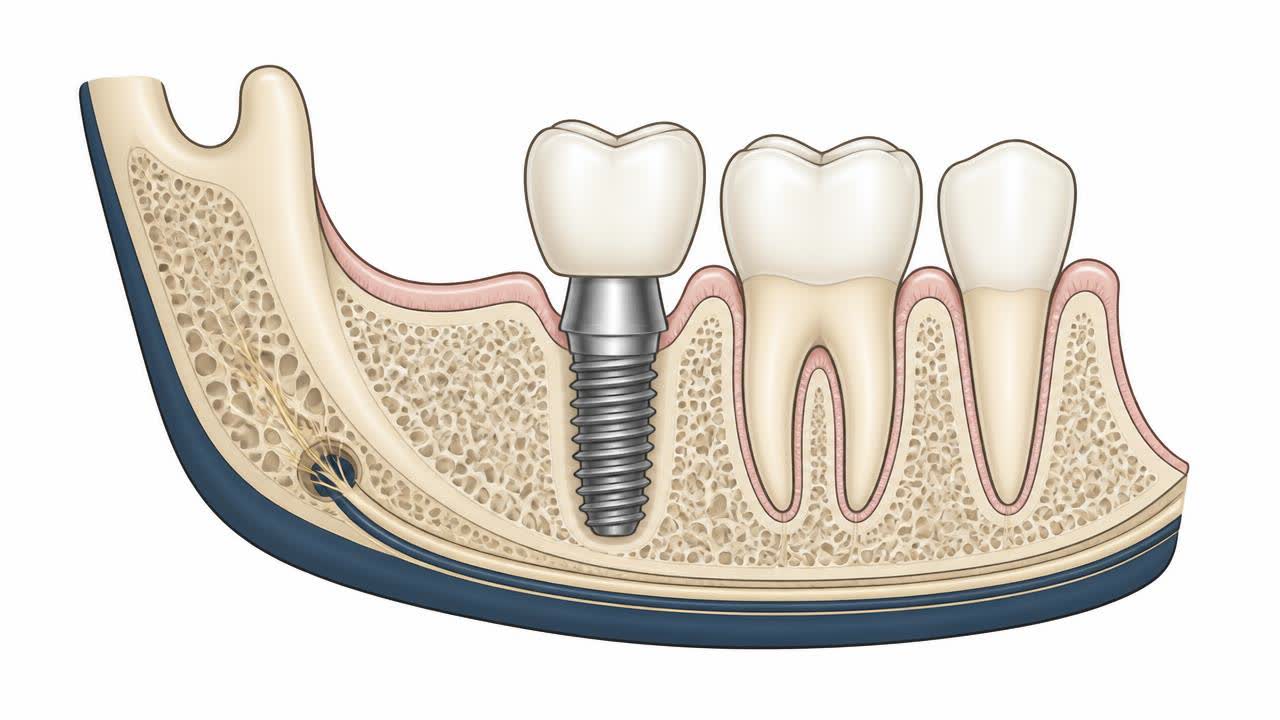
Dental implants are a game-changer. By replacing the roots of your teeth, they provide a rock-solid foundation that allows you to chew with complete confidence, enjoy all your favourite foods, and speak naturally. They never shift, click, or need to be taken out, and they look, feel, and function exactly like your natural teeth. For most patients, this stability is the greatest benefit of all.
Beyond function, implants are the only solution that preserves your jawbone health. The act of chewing on your implants provides the necessary stimulation to the bone, keeping it strong and maintaining your natural facial contours. This helps prevent the 'sunken' appearance that often occurs with long-term denture wear, providing an aesthetic benefit that is truly invaluable for your long-term confidence.
Making an Informed Choice
Your choice depends on a variety of factors: your overall health, the density of your jawbone, your personal lifestyle, and your budget. We will work with you to carefully evaluate your individual needs, providing you with all the information you need to make the choice that feels right for you. We take a personalised, patient-focused approach, ensuring you have the best information to make your decision.
We want you to feel confident and excited about your smile. Whether you choose the accessibility of dentures or the modern, stable benefits of dental implants, our goal is to provide you with the best possible treatment that meets your unique goals. Let's talk about what option will bring you the comfort, confidence, and quality of life you deserve.
Supporting Your Long-Term Health
Regardless of the path you choose, our team is dedicated to providing you with the very best care. We are here to support you at every stage, providing the expert service, guidance, and follow-up care that will ensure your smile remains comfortable, functional, and healthy. We are committed to your long-term success and to helping you feel great about your dental health every day.
We invite you to reach out and schedule a consultation with our team. We are here to listen, to answer your questions, and to help you navigate the options for your dental restoration. Your smile, your comfort, and your lasting health are our top priorities, and we look forward to working with you to achieve the very best result.
Questions patients ask us
- Why are dental implants often preferred over dentures?
- They offer far superior stability, as they are fixed firmly into your jawbone, meaning they never shift or slip when you talk or eat. They also preserve your jawbone health, prevent facial structure changes, and feel much more like your natural teeth than removable dentures.
- Are implants a good choice for someone with dentures?
- Absolutely! Many of our patients choose to transition from traditional dentures to an implant-supported solution to enjoy a more stable and comfortable life. We can even use implants to stabilise your existing dentures, which is a great, less extensive way to improve your quality of life.
- Which option is more cost-effective?
- While dentures have a lower initial cost, dental implants can be more cost-effective over the long term because they are a permanent, stable solution that doesn't require the ongoing costs of regular denture relining, adjustments, or replacement.
- Do I have to choose between them?
- Not necessarily! For some patients, we offer implant-supported dentures, which use a few implants to snap your denture into place for maximum stability and comfort. It's a wonderful, versatile way to get the best of both worlds, providing the accessibility of dentures with the stability of implants.
Sources and further reading
Guidance from professional and public health bodies. Clinical decisions here are made on your own examination and radiographs.
- 1.ITI Treatment Guide series and consensus statements — International Team for Implantology (ITI)
- 2.Consensus reports on implant dentistry — European Association for Osseointegration
- 3.Prosthodontic and edentulous-care patient guidance — American College of Prosthodontists
- 4.Oral health — fact sheet and global status report — World Health Organization
- 5.Policy statements and oral health definitions — FDI World Dental Federation
- 6.Dental health — conditions, treatments and patient guidance — NHS (UK)
- 7.Systematic reviews of oral and dental interventions — Cochrane Oral Health
- 8.Regulatory framework and dental education standards in India — Dental Council of India
When to see us
Get examined without waiting if any of the following applies to you:
- Pain, looseness or pus around an implant or a fixed bridge
- A crown, bridge or denture that has fractured or come away
- Gum swelling that keeps returning around the same restoration
Get a written plan and cost before you commit
If this is what you are dealing with, the next step is a consultation with radiographs — implants & missing teeth cases are seen by the specialist who handles that field. You get a written plan and staged cost before anything begins.
reception@dramitsharmahospital.comThis article is general education and does not replace an in-person examination, radiographs or a diagnosis by a qualified dentist.
Clinical terms in this article
Related in Implants & Missing Teeth
Missing Teeth: Comparing Dentures, Bridges and Implant Options
What happens if a missing tooth is left unreplaced, and how dentures, bridges and implants compare on comfort, longevity and bone health.
Dental Implants: A Complete Guide
How titanium implants replace missing teeth, who qualifies, the step-by-step timeline and how long they last.
Full Mouth Rehabilitation
Rebuilding a worn, collapsed or heavily damaged dentition with a sequenced, whole-mouth treatment plan.
Peri-Implant Mucositis Symptoms and Early Intervention
Peri-implant mucositis is a plaque-induced, reversible inflammatory lesion affecting the soft tissues surrounding a dental implant without bone loss. Prompt professional debridement, risk-factor modification, and meticulous biofilm control prevent progression to irreversible peri-implantitis.
Peri-Implantitis Symptoms Bone Loss and Implant Salvage
Peri-implantitis is an inflammatory condition causing progressive marginal bone loss around dental implants. Early detection, thorough decontamination, and advanced surgical salvage techniques can arrest bone destruction, resolve inflammation, and preserve implant stability.
Root Canal Retreatment vs Tooth Extraction and Implant
This clinical guide evaluates root canal retreatment versus tooth extraction and dental implant placement. Learn about biological tooth preservation, anatomical considerations, procedural steps, longevity, recovery expectations, and diagnostic criteria to make an informed oral healthcare decision.