At a glance
- Clear aligner therapy relies on precise mechanical forces to guide teeth into correct alignment.
- When an attachment or button detaches from the enamel surface, the underlying cause is typically mechanical failure at the resin-enamel interface.
- A common scenario during treatment occurs when Invisalign attachments or buttons fall off unexpectedly during eating, tooth brushing, or aligner removal.
- When a patient reports that clear aligner attachments or buttons fell off, the clinician performs a comprehensive clinical examination to assess both the tooth surface and the progression of tooth movement.
- Orthodontic attachments are classified into conventional and optimised designs.
Anatomy and Biomechanical Function of Attachments and Buttons
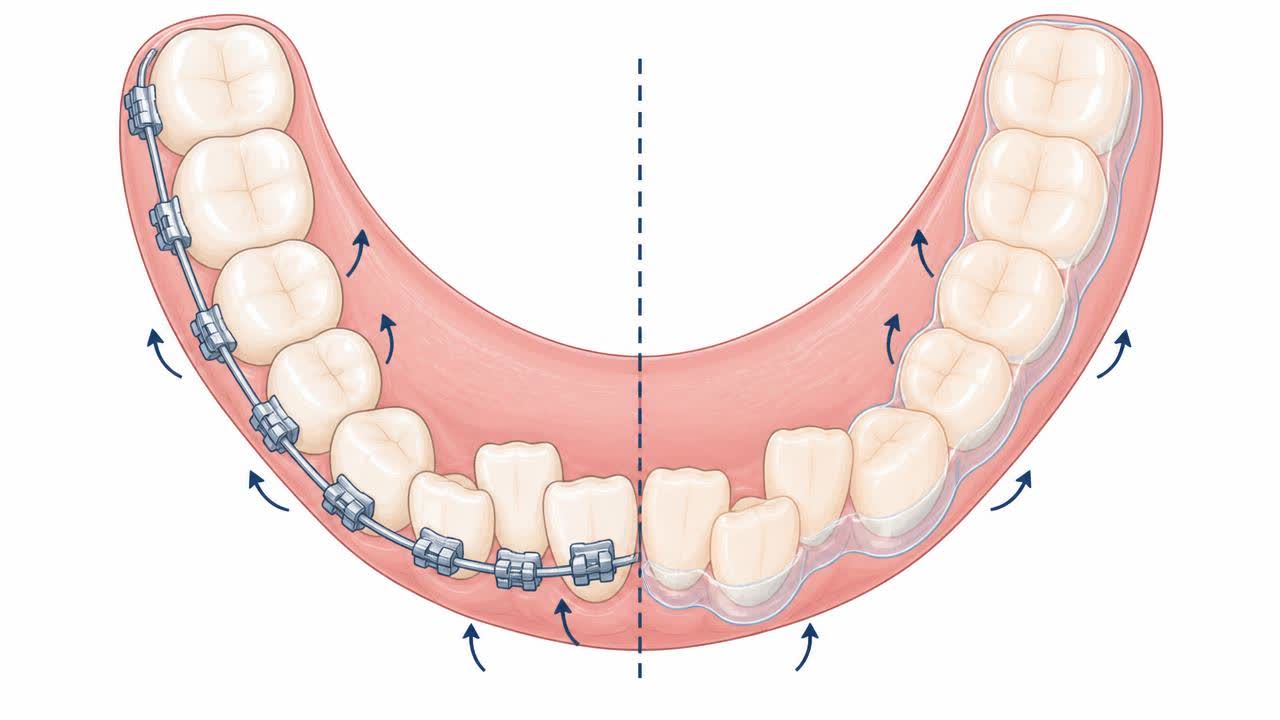
Clear aligner therapy relies on precise mechanical forces to guide teeth into correct alignment. Because smooth plastic trays can struggle to grip the slick, curved surfaces of dental enamel, orthodontists place small tooth-coloured grips known as attachments or engage auxiliaries called buttons. Attachments are sculpted deposits of dental composite resin bonded directly to specific teeth. They act as customised handles that allow the thermoplastic aligner material to exert multidirectional forces, enabling complex tooth movements such as bodily translation, extrusion, intrusion, and severe root derotation.
Orthodontic buttons, in contrast, are small metallic, ceramic, or composite anchors bonded to teeth or attached through cut-outs in the aligner. These buttons serve as anchor points for intermaxillary elastics (orthodontic rubber bands), which correct sagittal and vertical discrepancies, such as overjets, underbites, or open bites. Together, these bonded auxiliaries transform a simple passive cover into an active orthodontic appliance capable of three-dimensional force delivery.
The anatomical placement of each component is predetermined through digital treatment planning software. Clinicians calculate the centre of resistance for each individual tooth, determining the exact geometry, bevel, and orientation required to facilitate predictable root and crown movement without exerting pathological forces on the periodontal ligament or surrounding alveolar bone.
Diagnostic Assessment and Differential Considerations
When a patient reports that clear aligner attachments or buttons fell off, the clinician performs a comprehensive clinical examination to assess both the tooth surface and the progression of tooth movement. Visual and tactile inspection using a dental probe determines whether the component debonded cleanly at the enamel interface or fractured mid-body, leaving a residual composite base. Transillumination and air-drying help distinguish between residual adhesive resin and intact enamel prism structure.
The treating practitioner must also evaluate orthodontic tracking across the entire arch. Using intraoral mirrors and direct vision, the clinician assesses whether the uncoupled tooth has lagged behind the digital treatment projection. If substantial uncoupling has occurred, standard replacement of the attachment may be insufficient, and a new digital scan (refinement) might be necessary to fabricate updated aligners that match the current clinical position.
Differential diagnosis is straightforward but clinically vital. The practitioner must differentiate between adhesive failure, cohesive composite fracture, localized enamel fractures (enamel craze lines or chips), and the loss of natural tooth structure caused by trauma or underlying caries. If the patient has swallowed the auxiliary, the clinician must confirm the absence of respiratory symptoms to exclude rare foreign-body aspiration.
Aetiology: Why Clear Aligner Attachments and Buttons Debond
When an attachment or button detaches from the enamel surface, the underlying cause is typically mechanical failure at the resin-enamel interface. The bond between composite resin and tooth enamel relies on micromechanical retention created through acid etching. Several clinical variables influence this interface. Salivary contamination during initial placement, inadequate moisture control, or incomplete curing of the composite resin can significantly weaken bond strength, making the component susceptible to early failure during routine appliance use.
Patient-mediated forces represent another frequent cause of debonding. Excessive shear stress applied during aligner insertion or removal—particularly when patients pull the tray forcefully from the front instead of releasing it gently from the lingual or palatal margins—can exceed the tensile strength of the adhesive. Similarly, masticating dense, hard, or sticky foods, or consuming fibrous substances, transfers substantial direct lateral forces onto the bonded composite, causing it to fracture away from the tooth.
Parafunctional habits, including nocturnal bruxism (teeth grinding) and clenching, subject auxiliary components to destructive cyclical loads. Furthermore, in patients with restorative work such as porcelain crowns, composite veneers, or gold restorations, chemical bonding is inherently less predictable than on natural enamel, markedly increasing the incidence of attachment loss.
Clinical Presentation: Recognising a Lost or Broken Component
A common scenario during treatment occurs when Invisalign attachments or buttons fall off unexpectedly during eating, tooth brushing, or aligner removal. Patients typically notice a sudden change in intraoral texture, feeling a smooth or slightly chalky surface where a distinct geometric bump previously existed. Alternatively, you might discover the detached composite nodule inside your aligner tray after removing it, or feel a sharp residual ledge of composite resin against the buccal mucosa or tongue.
Another classic presentation is a subtle change in appliance fit. If an attachment is missing, the corresponding reservoir (the bubble or void built into the plastic aligner) will remain empty. Over subsequent days, this can lead to 'loss of tracking', where the clear aligner fails to seat intimately against the incisal edges of the teeth, leaving visible air gaps between the plastic and the tooth surface.
When an orthodontic button detaches, the presentation is immediate because the patient can no longer hook their intermaxillary elastics. The loss of elastic traction immediately suspends the correction of the bite relationship, highlighting the need for methodical daily inspection of all bonded auxiliaries during oral hygiene routines.
Classification and Geometries of Bonded Auxiliaries
Orthodontic attachments are classified into conventional and optimised designs. Conventional attachments are standard geometric shapes placed manually on the digital setup by the clinician. These include rectangular (horizontal or vertical), ellipsoidal, and beveled designs. Rectangular attachments are frequently employed for bodily movement, space closure, and retention of the aligner tray itself on short clinical crowns.
Optimised attachments are proprietary, algorithmically designed shapes that the treatment software automatically calculates based on specific biomechanical requirements. These include optimised rotation attachments (teardrop shapes providing distinct contact points), optimised extrusion attachments (angled ledges tailored for pulling teeth incisally), and optimised root control attachments (pairs of shaped resin designed to exert dual-moment forces on canine and premolar roots).
Buttons are categorised based on material and placement method. Direct-bond metal buttons offer superior tensile resilience for heavy intermaxillary traction, whereas clear ceramic or composite buttons provide aesthetic alternatives for visible anterior regions. Aligner-bonded buttons (bonded directly to the plastic rather than enamel) are sometimes used, though they carry different force distribution profiles.
The Clinical Reattachment Procedure: Step-by-Step
Replacing a detached attachment or button is a non-invasive, structured clinical procedure. The orthodontist or dental practitioner begins by isolating the affected tooth to maintain complete moisture control, often using cheek retractors, dry aids, and suction. Any residual composite resin from the previous attachment is carefully removed using a slow-speed tungsten carbide bur or fine polishing disc, restoring a clean enamel surface without removing natural tooth structure.
Next, the tooth surface is prepared using 37% orthophosphoric acid gel for 15 to 30 seconds. This process, known as acid etching, creates microscopic microporosities in the enamel hydroxyapatite. The tooth is thoroughly rinsed with water and dried until a characteristic chalky-white appearance is visible. A primer or universal bonding agent is applied, air-thinned, and occasionally light-cured, depending on the specific adhesive protocol used.
The practitioner then loads a specialised attachment template (a thin, flexible aligner tray containing wells for the missing shapes) with high-viscosity or flowable composite resin. The template is seated firmly over the dental arch, and a high-intensity light-curing unit polymerises the resin through the clear tray for the required duration. Finally, the template is stripped away, and fine finishing diamonds or abrasive points remove any excess resin (flash) to prevent soft tissue irritation and ensure the treatment aligner fits precisely.
Immediate Patient Action and Post-Appointment Management
If an Invisalign attachment or button falls off, the immediate rule is to remain calm and avoid discontinuing aligner wear unless instructed by your clinician. In the vast majority of cases, you should continue wearing your current aligner tray according to your prescribed schedule. The aligner still provides structural stability, prevents teeth from shifting backwards, and continues moving adjacent teeth that retain intact attachments.
Contact your orthodontic clinic promptly to inform them which specific tooth has lost its component. The team will assess whether the lost attachment requires urgent replacement before you advance to the next tray, or if it can wait until your next scheduled review. If an elastic button has detached, you must usually pause wearing the corresponding elastic band on that side, as uneven traction can pull the dental arches into an asymmetric bite.
If the debonding event has left a sharp edge of residual composite that irritates the tongue or inner cheek, apply a small pea-sized amount of orthodontic relief wax directly over the rough area. Avoid attempting to scrape, file, or remove remaining composite material yourself, as household implements can permanently gouge dental enamel.
Clinical Complications of Unmanaged Attachment Loss
Ignoring a debonded attachment can compromise the orthodontic outcome. The most immediate complication is the loss of directional force vectors. Without the physical engagement of the attachment, the clear aligner will merely glide over the tooth crown. Instead of rotating or moving bodily, the tooth may tip unpredictably or remain completely static while adjacent teeth move around it, leading to significant clinical 'lag'.
Over several aligner stages, this tracking failure compounds. The plastic tray will progressively diverge from the actual dental anatomy, leading to poor seating, localized distortion of the aligner plastic, and uncoordinated forces. In severe instances, uncontrolled aligner forces acting on an untracked tooth can cause unwanted root proximity, tipping beyond the cortical bone plate, or localized periodontal bone loss.
Resolving advanced tracking failure usually requires stopping active treatment, taking new intraoral scans, and ordering a complete refinement series of aligners. This outcome adds multiple weeks or months to overall treatment duration and may necessitate additional clinical visits for extensive composite replacement.
Evidence and further reading
The biomechanical role of auxiliaries in clear aligner therapy is widely documented in peer-reviewed orthodontic literature. Authoritative bodies, including the British Orthodontic Society, the American Association of Orthodontists, and the FDI World Dental Federation, emphasise that clear aligners achieve predictable clinical outcomes through the strategic synergy of force-displacement mechanics and composite attachments.
Clinical trials and systematic reviews published in the *American Journal of Orthodontics and Dentofacial Orthopedics* and the *Journal of Clinical Orthodontics* indicate that complex movements—specifically premolar rotation, incisor extrusion, and root torque—show significantly higher efficacy rates when supported by optimised attachments compared to aligners alone. Studies evaluating bonding systems confirm that enamel preparation protocols adhering to standard acid-etch techniques provide the necessary shear bond strength to withstand typical aligner removal forces.
Furthermore, guidance from the National Institute for Health and Care Excellence (NICE) and leading oral health research institutions highlights that maintaining patient compliance with wear schedules and avoiding harmful dietary habits are essential for preventing auxiliary failure and ensuring treatment success.
Preventive Strategies and Long-Term Maintenance
Preventing attachment debonding requires strict adherence to recommended aligner insertion and removal protocols. When removing aligners, patients should use their fingertips or an aligner removal tool to gently unhook the tray from the lingual (tongue) or palatal (roof of mouth) edges of the posterior molars first. Working forward along both sides before easing the front section away minimizes destructive outward shear forces on buccal attachments.
Dietary modifications play a significant role. Although clear aligners are removed during meals, bonded attachments and buttons remain exposed to masticatory forces. Patients must avoid biting directly into hard, unyielding foods (such as hard crusts, ice, or unpitted fruits) and refrain from chewing sticky confectionery. In populations where chewing paan (betel leaf), gutka, or areca nut is prevalent, complete cessation is critical; these fibrous, abrasive substances generate immense lateral shearing forces that rapidly strip composite attachments while permanently staining adhesive margins.
Meticulous oral hygiene is equally vital. Plaque accumulation around the periphery of attachments can cause localized enamel demineralisation (white spot lesions) and compromise bond integrity. Brush thoroughly around each attachment twice daily using a soft-bristled toothbrush and fluoride toothpaste, and clean interdentally to preserve gingival health throughout treatment.
Clinical Red Flags Requiring Urgent Professional Care
While a lost attachment is generally an elective maintenance issue rather than an emergency, certain clinical presentations require immediate attention. If a detached button or piece of composite is accidentally inhaled rather than swallowed, leading to persistent coughing, wheezing, or difficulty breathing, the patient must attend an emergency department immediately to rule out bronchial aspiration.
Prompt dental evaluation is also indicated if a sharp residual composite fragment causes deep mucosal lacerations, severe oral ulceration, or localized soft-tissue infection. Patients should contact the clinic if they experience sudden, sharp, throbbing dental pain or notice marked pathological mobility in the unattached tooth, which could indicate abnormal force distribution or acute occlusal trauma.
Additionally, if you lose multiple attachments simultaneously (e.g., three or more across an arch) and the current aligner tray rocks, lifts away from the occlusal plane, or causes intense pinching pressure, do not advance to the next aligner tray. Contact your dental provider for an interim appointment to re-establish proper aligner seating.
Questions patients ask us
- What should I do immediately if my Invisalign attachment or button falls off?
- Keep wearing your aligners as prescribed unless instructed otherwise. Contact your orthodontic clinic to report which tooth has lost its attachment. If a button for elastics fell off, stop wearing elastics on that side until your orthodontist advises you, as single-sided traction can pull your bite out of balance.
- Can I move to my next aligner tray if an attachment is missing?
- In most cases, you can advance to the next tray if it seats completely and tracking is maintained. However, you must inform your provider before switching trays, as certain key attachments—such as those controlling severe rotations or extrusions—must be replaced before progression.
- Is it dangerous if I accidentally swallow a clear aligner attachment or button?
- Swallowing a small composite attachment or dental button is generally harmless; it will pass naturally through the digestive tract. However, if you experience sudden coughing, wheezing, or shortness of breath, seek emergency medical care immediately to ensure the component was not aspirated into your airways.
- Does replacing a debonded clear aligner attachment hurt?
- No, replacing an attachment is entirely painless and requires no local anaesthesia. The procedure involves gently cleaning the enamel surface, applying preparation gels, positioning a light plastic template loaded with tooth-coloured resin, and curing it with a special blue light.
- Why do my attachments keep falling off the same tooth?
- Repeated debonding is usually caused by heavy biting forces on that specific tooth, bonding onto artificial surfaces like porcelain or gold crowns, moisture contamination during placement, or improper aligner removal technique that applies excessive direct leverage to the resin.
- Can chewing paan, gutka, or tobacco damage aligner attachments?
- Yes. Chewing paan, gutka, betel nut, or tobacco creates severe abrasive and shearing forces that can chip or dislodge composite resin attachments. Furthermore, these substances cause severe, irreversible brown and yellow staining around the margins of your attachments and dental enamel.
- How can I tell if my tooth has stopped tracking after losing an attachment?
- Look closely in a mirror with your aligner fully seated. If you see a visible air gap or space between the edge of your tooth and the plastic tray, the tooth has stopped tracking. You may also notice the aligner feels loose or does not snap firmly into place.
- Will losing an attachment extend my overall orthodontic treatment time?
- A single lost attachment that is promptly addressed rarely impacts treatment length. However, if multiple attachments remain missing or if tracking is lost over several trays, your clinician may need to order a new set of refinement aligners, adding weeks or months to your treatment.
Sources and further reading
Guidance from professional and public health bodies. Clinical decisions here are made on your own examination and radiographs.
- 1.Orthodontic treatment and retention — patient resources — American Association of Orthodontists
- 2.Patient information leaflets on appliances and retention — British Orthodontic Society
- 3.Oral health — fact sheet and global status report — World Health Organization
- 4.Policy statements and oral health definitions — FDI World Dental Federation
- 5.Dental health — conditions, treatments and patient guidance — NHS (UK)
- 6.Systematic reviews of oral and dental interventions — Cochrane Oral Health
- 7.Regulatory framework and dental education standards in India — Dental Council of India
When to see us
Get examined without waiting if any of the following applies to you:
- A broken bracket, poking wire or appliance causing ulceration
- A tooth that becomes painful, loose or discoloured during treatment
- Jaw joint pain, locking or a bite that has changed suddenly
Get a written plan and cost before you commit
If this is what you are dealing with, the next step is a consultation with radiographs — orthodontics cases are seen by the specialist who handles that field. You get a written plan and staged cost before anything begins.
reception@dramitsharmahospital.comThis article is general education and does not replace an in-person examination, radiographs or a diagnosis by a qualified dentist.
Clinical terms in this article
Related in Orthodontics
Aligners and Braces: Choosing the Right Option
Metal, ceramic and clear aligner treatment compared, duration, visibility, cost and suitability.
Tooth Extraction for Braces or Severe Crowding Issues
Orthodontic extractions involve the planned removal of select teeth to resolve severe crowding, correct bimaxillary protrusion, and balance dentoalveolar proportions. This clinical guide details diagnostic indications, extraction patterns, procedural steps, recovery, risks, and evidence-based non-extraction alternatives.
Maxillary Osteotomy for Open Bite Alignment and Correction
Maxillary osteotomy for open bite corrects severe vertical skeletal discrepancies through surgical repositioning of the upper jaw. Combined with orthodontics, this procedure restores chewing function, improves speech articulation, and ensures long-term occlusal and facial stability.
Surgically Assisted Rapid Palatal Expansion for Adult Palate Widening
Surgically assisted rapid palatal expansion (SARPE) is a combined orthodontic and surgical treatment designed to correct severe transverse maxillary deficiency in skeletally mature adults, widening the narrow upper jaw to restore functional occlusion, stability, and airway volume.
Surgical Exposure and Bracket Bonding for Impacted Canine Teeth
This clinical guide details impacted canine exposure surgery and bracket bonding. It explains anatomical causes, CBCT diagnostic pathways, open versus closed surgical techniques, orthodontic traction mechanisms, recovery protocols, and evidence-based strategies to manage complications.
Overbite vs Overjet: Key Differences and Correction Methods
This clinical guide clarifies the distinction between overbite (vertical overlap) and overjet (horizontal protrusion). It examines their aetiology, diagnostic pathways, classification, and evidence-based orthodontic and surgical correction methods across paediatric and adult populations.