At a glance
- Cone Beam Computed Tomography, or CBCT, is a specialised 3D X-ray technology that produces detailed cross-sectional images of the jaw, teeth, nerves, and sinuses, unlike a standard 2D dental X-ray which only shows a flat image…
- Relying on 2D imaging alone can lead to inaccurate assessment of bone volume, since it cannot show the width of the bone or reveal hidden anatomical variations.
- Using the CBCT data combined with a digital scan of the patient's teeth and gums, specialised software allows the implantologist to virtually plan the exact three-dimensional position of each implant before surgery, taking into…
- Guided implant surgery can reduce surgical time, minimise the size of the incision required in some cases, and improve the accuracy of implant placement, which supports better long-term function and aesthetics, particularly for…
What Is CBCT Imaging
Cone Beam Computed Tomography, or CBCT, is a specialised 3D X-ray technology that produces detailed cross-sectional images of the jaw, teeth, nerves, and sinuses, unlike a standard 2D dental X-ray which only shows a flat image from one angle.
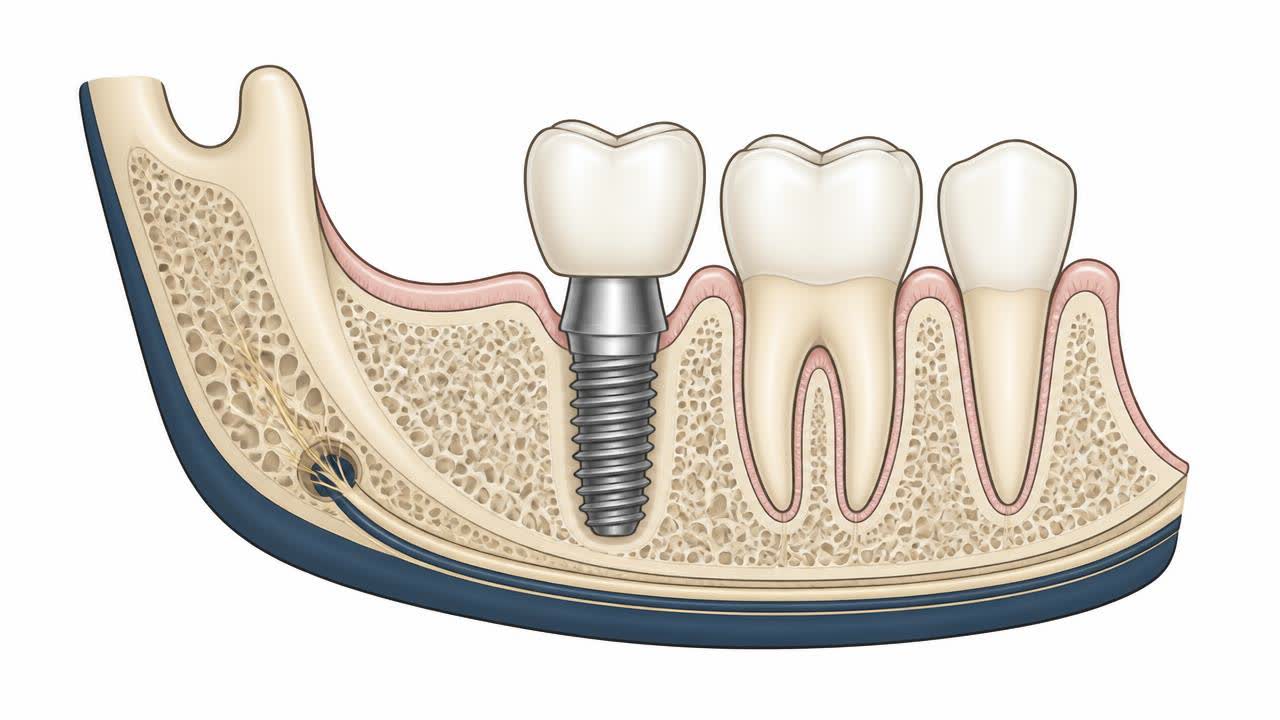
For implant planning, CBCT allows the dentist to precisely measure bone height, width, and density at the intended implant site, and to clearly identify the location of important anatomical structures such as the inferior alveolar nerve and the maxillary sinus, which must be avoided during surgery.
Why 3D Planning Matters
Relying on 2D imaging alone can lead to inaccurate assessment of bone volume, since it cannot show the width of the bone or reveal hidden anatomical variations. CBCT gives a far more complete and accurate picture, allowing more predictable treatment planning before any incision is made.
This detailed information helps determine whether a patient needs bone grafting, a sinus lift, or can proceed directly to implant placement, and allows the dentist to select the most appropriate implant length, width, and angulation for that specific patient's anatomy.
How Guided Surgery Works
Using the CBCT data combined with a digital scan of the patient's teeth and gums, specialised software allows the implantologist to virtually plan the exact three-dimensional position of each implant before surgery, taking into account both the available bone and the ideal position for the future crown.
A custom surgical guide, often 3D printed based on this digital plan, is then used during the actual surgery to direct the drill and implant placement precisely according to the pre-planned position, angle, and depth, translating the digital plan into a physical, repeatable outcome.
Benefits for Patients
Guided implant surgery can reduce surgical time, minimise the size of the incision required in some cases, and improve the accuracy of implant placement, which supports better long-term function and aesthetics, particularly for complex cases involving multiple implants.
For patients, this translates into a more predictable procedure with fewer surprises, a clearer understanding of the treatment plan discussed beforehand using the 3D images, and often a smoother, more comfortable surgical and recovery experience overall.
Questions patients ask us
- Is a CBCT scan safe?
- CBCT scans use a relatively low radiation dose compared to medical CT scans and are considered safe for routine dental use when clinically indicated. Your dentist will only recommend one when the additional diagnostic information is necessary for your specific treatment planning.
- Do all implant cases need guided surgery?
- Not necessarily. Straightforward single implant cases with generous bone volume can sometimes be planned and placed accurately without a surgical guide, though many dentists now use guided protocols routinely to improve precision and predictability across most cases.
- How long does a CBCT scan take?
- The scan itself typically takes less than a minute, though you will need to remain still while the machine rotates around your head. The images are then processed and available for review with your dentist shortly afterwards.
- Does guided surgery cost more?
- Guided surgery involves additional planning software and a custom surgical guide, which can add to overall treatment costs, but many patients and clinicians consider the improved accuracy and predictability a worthwhile investment, particularly for complex or multiple implant cases.
Sources and further reading
Guidance from professional and public health bodies. Clinical decisions here are made on your own examination and radiographs.
- 1.ITI Treatment Guide series and consensus statements — International Team for Implantology (ITI)
- 2.Consensus reports on implant dentistry — European Association for Osseointegration
- 3.Prosthodontic and edentulous-care patient guidance — American College of Prosthodontists
- 4.Oral health — fact sheet and global status report — World Health Organization
- 5.Policy statements and oral health definitions — FDI World Dental Federation
- 6.Dental health — conditions, treatments and patient guidance — NHS (UK)
- 7.Systematic reviews of oral and dental interventions — Cochrane Oral Health
- 8.Regulatory framework and dental education standards in India — Dental Council of India
When to see us
Get examined without waiting if any of the following applies to you:
- Pain, looseness or pus around an implant or a fixed bridge
- A crown, bridge or denture that has fractured or come away
- Gum swelling that keeps returning around the same restoration
Get a written plan and cost before you commit
If this is what you are dealing with, the next step is a consultation with radiographs — implants & missing teeth cases are seen by the specialist who handles that field. You get a written plan and staged cost before anything begins.
reception@dramitsharmahospital.comThis article is general education and does not replace an in-person examination, radiographs or a diagnosis by a qualified dentist.
Clinical terms in this article
Related in Implants & Missing Teeth
Missing Teeth: Comparing Dentures, Bridges and Implant Options
What happens if a missing tooth is left unreplaced, and how dentures, bridges and implants compare on comfort, longevity and bone health.
Dental Implants: A Complete Guide
How titanium implants replace missing teeth, who qualifies, the step-by-step timeline and how long they last.
Full Mouth Rehabilitation
Rebuilding a worn, collapsed or heavily damaged dentition with a sequenced, whole-mouth treatment plan.
Peri-Implant Mucositis Symptoms and Early Intervention
Peri-implant mucositis is a plaque-induced, reversible inflammatory lesion affecting the soft tissues surrounding a dental implant without bone loss. Prompt professional debridement, risk-factor modification, and meticulous biofilm control prevent progression to irreversible peri-implantitis.
Peri-Implantitis Symptoms Bone Loss and Implant Salvage
Peri-implantitis is an inflammatory condition causing progressive marginal bone loss around dental implants. Early detection, thorough decontamination, and advanced surgical salvage techniques can arrest bone destruction, resolve inflammation, and preserve implant stability.
Root Canal Retreatment vs Tooth Extraction and Implant
This clinical guide evaluates root canal retreatment versus tooth extraction and dental implant placement. Learn about biological tooth preservation, anatomical considerations, procedural steps, longevity, recovery expectations, and diagnostic criteria to make an informed oral healthcare decision.