At a glance
- Transitioning to removable dental prostheses involves a fundamental shift in oral physiology.
- The primary challenge when eating with new dentures stems from altered force distribution and diminished sensory input.
- During the first several weeks of wearing a new prosthesis, patients encounter a predictable series of physiological responses.
- When diagnosing difficulties with eating or articulation, a dental practitioner conducts a meticulous clinical examination of both the oral tissues and the prosthesis.
- The trajectory of adaptation depends significantly on the specific prosthetic design and the anatomy of the edentulous ridge.
Anatomy, Neuromuscular Adaptation, and the Mechanics of Dentures
Transitioning to removable dental prostheses involves a fundamental shift in oral physiology. Natural teeth are suspended within the alveolar bone by the periodontal ligament, a specialised connective tissue rich in mechanoreceptors. These receptors provide instantaneous sensory feedback, known as proprioception, which dictates chewing force, tongue placement, and jaw trajectory. When teeth are lost, this natural sensory feedback is eliminated. Complete or partial dentures must instead rest directly on the residual alveolar ridge and oral mucosa, tissues that are inherently sensitive and not biologically designed to bear heavy masticatory loads.
The oral musculature—chiefly the tongue, buccinator muscles in the cheeks, and the orbicularis oris forming the lips—must undergo an active process of neuromuscular adaptation. Rather than functioning solely for swallowing and expression, these muscles must learn to actively stabilise the acrylic denture base against the underlying bone during function. In the upper jaw, a maxillary complete denture relies on peripheral seal and suction across the hard palate, whereas a mandibular lower denture relies largely on balanced muscle control and minimal resting ridge anatomy, making lower dentures inherently more challenging to stabilise during speech and mastication.
Clinical Assessment, Occlusal Diagnostics, and Fit Evaluation
When diagnosing difficulties with eating or articulation, a dental practitioner conducts a meticulous clinical examination of both the oral tissues and the prosthesis. The clinician evaluates the vertical dimension of occlusion (the distance between the upper and lower jaws when teeth meet) to ensure adequate freeway space—the resting gap between teeth when the jaw is relaxed. If the vertical dimension is excessive, the facial muscles remain under continuous tension, causing generalised muscle fatigue, clicking teeth during speech, and widespread mucosal soreness.
The dentist utilizes pressure-indicating paste (a specialised non-toxic white paste spread over the fitting surface) to identify high-pressure zones that cause localised mucosal ulceration. Articulating paper is used to map occlusal contacts during static clenching and dynamic chewing movements. Imbalances in occlusal contact can cause the denture to tilt, breaking the peripheral seal and causing focal trauma. Radiographic assessment, such as panoramic radiography, may be employed to rule out underlying retained root fragments, sharp bony spicules, or pathology within the residual alveolar ridge.
Why Eating and Speaking Feel Different: Physiological Causes
The primary challenge when eating with new dentures stems from altered force distribution and diminished sensory input. Natural dentition can generate significant occlusal bite forces, whereas initial masticatory efficiency with complete dentures is substantially reduced. Because the resilient oral mucosa compresses under pressure, the brain receives unfamiliar pressure signals rather than precise periodontal feedback. Additionally, the physical presence of acrylic covering the hard palate insulates thermal receptors and minor salivary glands, transiently dulling taste perception, temperature discrimination, and the natural tactile awareness of food bolus formation.
Phonetic alterations occur because speech articulation depends on precise micro-movements of the tongue against the hard palate, alveolar ridge, and incisal edges of the teeth. Prosthetic teeth and acrylic bases subtly alter the dimensions of the oral cavity and change the resonance chamber. Sounds such as sibilants (the 's' and 'z' sounds) and fricatives (the 'f' and 'v' sounds) require exact air escape channels. Until the tongue adapts to the modified intraoral space and the altered vertical dimension of occlusion, patients frequently experience transient lisping, whistling, or a sensation that the mouth is overcrowded.
Initial Clinical Presentation and Normal Acclimatisation Symptoms
During the first several weeks of wearing a new prosthesis, patients encounter a predictable series of physiological responses. A pronounced increase in salivation, termed sialorrhoea, is universally common. The brain initially perceives the new foreign appliance as a large food bolus, prompting the autonomic nervous system to stimulate the major salivary glands. As the oral neural pathways habituate to the constant presence of the acrylic, salivary flow normalises, typically within one to three weeks.
Mild mucosal soreness, localised pressure areas, and muscular fatigue in the masseter and temporalis muscles are also expected during early function. Patients often report an active gag reflex, particularly with maxillary prostheses extending toward the junction of the hard and soft palate (the vibrating line). While these sensory responses are a normal part of habituation, sharp pain, continuous soft tissue abrasion, or prostheses that become dislodged during normal conversational speech signify the need for precise clinical adjustment rather than continued endurance.
Classification of Prostheses and Ridge Morphology
The trajectory of adaptation depends significantly on the specific prosthetic design and the anatomy of the edentulous ridge. Conventional complete dentures replace an entire dental arch and rely solely on tissue support. Removable partial dentures (often classified according to the Kennedy classification system based on the location of edentulous spaces) utilise clasps and rests on remaining natural teeth, providing inherently superior retention and stability compared to complete tissue-borne appliances.
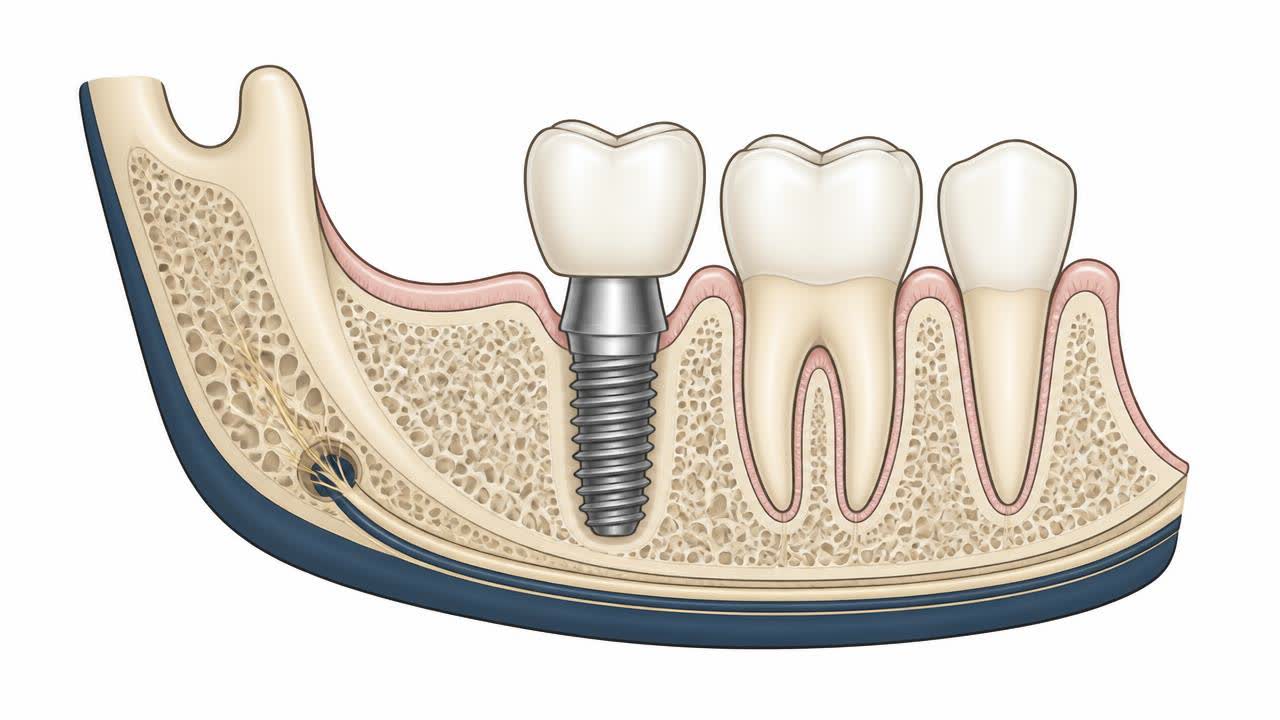
Implant-retained overdentures utilise endosseous implants embedded within the jawbone, connected via precision attachments (such as locators or milled bars). These appliances drastically improve masticatory performance and eliminate excessive movement. Ridge morphology is clinically graded according to residual ridge resorption classifications; patients with severely resorbed, flat mandibular ridges face the greatest neuromuscular challenge when eating, often requiring specialized techniques, neutral zone impression procedures, or implant stabilization to achieve functional chewing.
Phased Dietary Strategies for Eating with New Dentures
Mastering eating with new dentures requires a deliberate, phased transition across several weeks. In the initial days, a soft and non-cohesive diet is essential. Patients should begin with foods that require minimal mastication, such as well-cooked pulses, scrambled eggs, yoghurt, smooth soups, and mashed vegetables. Biting directly into foods using the front incisors must be strictly avoided during early adaptation, as this generates a lever effect that dislodges the posterior seal of the denture, lifting it away from the ridge.
When progressing to firmer textures, food must be cut into small, manageable pieces. Chew slowly and distribute the food bolus bilaterally—placing equal amounts of food on both sides of the mouth simultaneously toward the premolars and molars. Bilateral chewing equalises occlusal forces, preventing the denture from tipping or pinching the delicate underlying mucosa. Avoid extremely sticky textures (such as toffee or dense doughs), hard nuts, crusty breads, and fibrous meats until neuromuscular coordination is fully established. Highly fibrous regional diets, including traditional preparations involving coarse grains or stringy greens, should be finely chopped or puréed during the initial weeks.
Phonetic Training and Speech Rehabilitation Techniques
Speech rehabilitation is an active neuromuscular retraining process. To accelerate phonetic clarity, patients should practice targeted reading exercises aloud for 15 to 20 minutes daily. Reading a book, newspaper, or magazine at a steady, deliberate pace allows the auditory feedback loop to help the brain reposition the tongue automatically. If a specific word sounds distorted or accompanied by a lisp, repeat that individual word slowly until the tongue discovers the optimal contact point against the palate or denture teeth.
Specific focus should be placed on counting aloud from 60 to 70, as this series forces repeated production of sibilant 's' sounds, training the tongue to control the precise lateral escape of air without causing the denture to whistle or dislodge. Practicing fricatives by vocalising words containing 'f' and 'v' helps establish correct contact between the maxillary incisors and the wet-dry line of the lower lip. If excessive saliva causes speech to sound muffled, swallowing firmly prior to speaking quickly clears the oral vestibule.
Evidence and further reading
Prosthodontic management guidelines published by international authorities, including the FDI World Dental Federation, the American Dental Association, and the British Society of Prosthodontics, consistently emphasise that prosthetic success depends equally on precise technical fabrication and structured patient rehabilitation. Systematic reviews within Cochrane clinical summaries and the Journal of Prosthetic Dentistry affirm that bilateral balanced occlusion and routine nocturnal rest significantly reduce residual ridge resorption and the incidence of mucosal pathology.
Clinical evidence in the International Journal of Prosthodontics demonstrates that neuromuscular adaptation is a progressive process that varies according to anatomical volume, patient age, and systemic health. Healthcare guidelines from organisations such as the National Institute for Health and Care Excellence (NICE) advise regular annual oral mucosal screening for all edentulous patients, reinforcing that routine surveillance remains vital for detecting tissue alterations and maintaining long-term oral-systemic wellbeing.
Complications, Mucosal Pathology, and Risk Factors
Failure to manage denture hygiene or wearing ill-fitting appliances can lead to preventable clinical complications. Denture-related stomatitis is an erythematous inflammation of the denture-bearing mucosa, frequently caused by an overgrowth of Candida albicans beneath an unhygienic or continuously worn prosthesis. Traumatic ulcers develop rapidly where sharp acrylic margins or occlusal interferences concentrate excessive pressure onto delicate epithelial tissues. If left uncorrected, chronic mechanical irritation can cause inflammatory fibrous hyperplasia, known as epulis fissuratum—fibrous folds of tissue that form along the denture borders.
Habits such as using paan, gutka, betel quid, or smoking tobacco substantially exacerbate mucosal irritation beneath prostheses, drastically impairing tissue healing and increasing the risk of oral potentially malignant disorders and carcinomas. In patients who chew betel nut or use smokeless tobacco, the mucosal lining undergoes chronic chemical and mechanical trauma, making the tissues exceptionally fragile under prosthetic load. Angular cheilitis, characterized by painful erythema and fissures at the labial commissures (corners of the mouth), frequently arises when an incorrect, reduced vertical dimension of occlusion allows saliva to pool in deep facial folds.
Hygiene Protocols, Prosthetic Maintenance, and Ridge Preservation
Maintaining mucosal health and prolonging the life of a removable prosthesis requires rigorous daily hygiene. Dentures must be removed and cleansed thoroughly after meals using a soft-bristled denture brush and non-abrasive denture cleanser or mild unscented soap. Standard household toothpastes contain abrasive particles that scratch acrylic surfaces, creating microscopic niches that harbour pathogenic bacterial and fungal biofilms. The oral mucosa, palate, and tongue should be gently brushed daily with an ultra-soft manual brush to stimulate vascular circulation and remove debris.
Continuous 24-hour wear is clinically discouraged. Prostheses must be removed overnight for at least 6 to 8 hours to allow the underlying tissues to rest, recover from mechanical compression, and benefit from the antimicrobial properties of natural saliva. When removed, dentures should be submerged in clean, cold water or a dedicated effervescent cleansing solution to prevent the acrylic from drying and warping. Because residual alveolar bone undergoes continuous, irreversible physiological resorption over time, dentures require periodic professional relining or rebasing every two to four years to maintain an accurate fit.
Red Flags: When to Seek Immediate Dental Attention
While mild adaptation challenges are expected, certain signs demand prompt professional intervention. Any solitary, non-healing ulcer or mucosal lesion that persists for more than 10 to 14 days beneath a denture base must be evaluated immediately by a dental clinician or oral specialist to rule out severe dysplasia or oral squamous cell carcinoma. Self-treating ulcers with over-the-counter topical gels without clinical inspection can dangerously delay the diagnosis of serious underlying pathology.
Immediate clinical assessment is also warranted if a patient develops acute, throbbing pain, facial swelling, dysphagia (difficulty swallowing), visible purulence (pus) beneath the prosthesis, or systemic signs of infection such as fever. Severe denture instability that triggers persistent choking episodes or an inability to achieve basic nutritional hydration and caloric intake represents an urgent functional failure requiring professional occlusal correction, tissue conditioning, or prosthetic remaking.
Questions patients ask us
- How long does it typically take to feel comfortable eating with new dentures?
- Full adaptation generally requires between 4 to 8 weeks of consistent wear. Neuromuscular retraining occurs in phases: soft foods can usually be managed within the first 2 weeks, while firmer textures and complex chewing patterns require progressive muscle adaptation over the following month as oral tissues adjust.
- Why do my new dentures make clicking sounds when I speak or eat?
- Clicking occurs when the artificial teeth hit together unintentionally. This usually happens because the jaw muscles have not yet adapted to the new vertical dimension of occlusion, or because the lower denture is slightly shifting. If clicking persists beyond two weeks, your dentist may need to adjust the bite.
- Can I use denture adhesive while I am still adjusting to my new prosthesis?
- Denture adhesives can provide added stability and security during the initial learning curve. However, adhesive should never be used as a substitute for a poorly fitting denture or to compensate for persistent instability. Always consult your dentist before applying adhesives during the immediate post-insertion phase.
- What should I do if my new dentures cause painful sore spots on my gums?
- Remove the dentures to let the tissues rest if pain is severe, but wear them for several hours immediately prior to your dental appointment. This allows the dentist to visually identify the exact pressure points on your mucosa and relieve the corresponding area on the acrylic base accurately.
- Why does food taste different or bland since getting my new dentures?
- Maxillary complete dentures cover the hard palate, which contains minor salivary glands and thermal receptors that contribute to food perception. While taste buds on the tongue are unaffected, the temporary reduction in temperature and tactile sensation can alter flavor perception, which gradually improves as sensory pathways adjust.
- Is it safe to sleep with my new dentures in place?
- No, sleeping with dentures is not recommended. Continuous wear deprives the underlying mucosa of oxygen and blood flow, significantly increasing the risk of fungal infections such as denture stomatitis and accelerating jawbone loss. Dentures should be removed for 6 to 8 hours every night.
- How can I manage an overactive gag reflex with a new upper denture?
- An active gag reflex is common initially. Practicing conscious nasal breathing, sucking on a small sugar-free hard sweet, or using mild saline mouth rinses can help. If gagging persists, your dentist must evaluate the posterior border of the upper denture to ensure it does not overextend past the vibrating line.
- Can chewing tobacco, paan, or smoking damage my mouth while wearing dentures?
- Yes. Tobacco, paan, and betel quid cause severe mechanical abrasion and chemical irritation to tissues compressed beneath a denture base. These habits drastically increase the risk of chronic ulceration, fungal infections, and oral precancerous or cancerous lesions, necessitating total cessation and prompt clinical screening.
Sources and further reading
Guidance from professional and public health bodies. Clinical decisions here are made on your own examination and radiographs.
- 1.ITI Treatment Guide series and consensus statements — International Team for Implantology (ITI)
- 2.Consensus reports on implant dentistry — European Association for Osseointegration
- 3.Prosthodontic and edentulous-care patient guidance — American College of Prosthodontists
- 4.Oral health — fact sheet and global status report — World Health Organization
- 5.Policy statements and oral health definitions — FDI World Dental Federation
- 6.Dental health — conditions, treatments and patient guidance — NHS (UK)
- 7.Systematic reviews of oral and dental interventions — Cochrane Oral Health
- 8.Regulatory framework and dental education standards in India — Dental Council of India
When to see us
Get examined without waiting if any of the following applies to you:
- Pain, looseness or pus around an implant or a fixed bridge
- A crown, bridge or denture that has fractured or come away
- Gum swelling that keeps returning around the same restoration
Get a written plan and cost before you commit
If this is what you are dealing with, the next step is a consultation with radiographs — implants & missing teeth cases are seen by the specialist who handles that field. You get a written plan and staged cost before anything begins.
reception@dramitsharmahospital.comThis article is general education and does not replace an in-person examination, radiographs or a diagnosis by a qualified dentist.
Clinical terms in this article
Related in Implants & Missing Teeth
Missing Teeth: Comparing Dentures, Bridges and Implant Options
What happens if a missing tooth is left unreplaced, and how dentures, bridges and implants compare on comfort, longevity and bone health.
Dental Implants: A Complete Guide
How titanium implants replace missing teeth, who qualifies, the step-by-step timeline and how long they last.
Full Mouth Rehabilitation
Rebuilding a worn, collapsed or heavily damaged dentition with a sequenced, whole-mouth treatment plan.
Peri-Implant Mucositis Symptoms and Early Intervention
Peri-implant mucositis is a plaque-induced, reversible inflammatory lesion affecting the soft tissues surrounding a dental implant without bone loss. Prompt professional debridement, risk-factor modification, and meticulous biofilm control prevent progression to irreversible peri-implantitis.
Peri-Implantitis Symptoms Bone Loss and Implant Salvage
Peri-implantitis is an inflammatory condition causing progressive marginal bone loss around dental implants. Early detection, thorough decontamination, and advanced surgical salvage techniques can arrest bone destruction, resolve inflammation, and preserve implant stability.
Root Canal Retreatment vs Tooth Extraction and Implant
This clinical guide evaluates root canal retreatment versus tooth extraction and dental implant placement. Learn about biological tooth preservation, anatomical considerations, procedural steps, longevity, recovery expectations, and diagnostic criteria to make an informed oral healthcare decision.