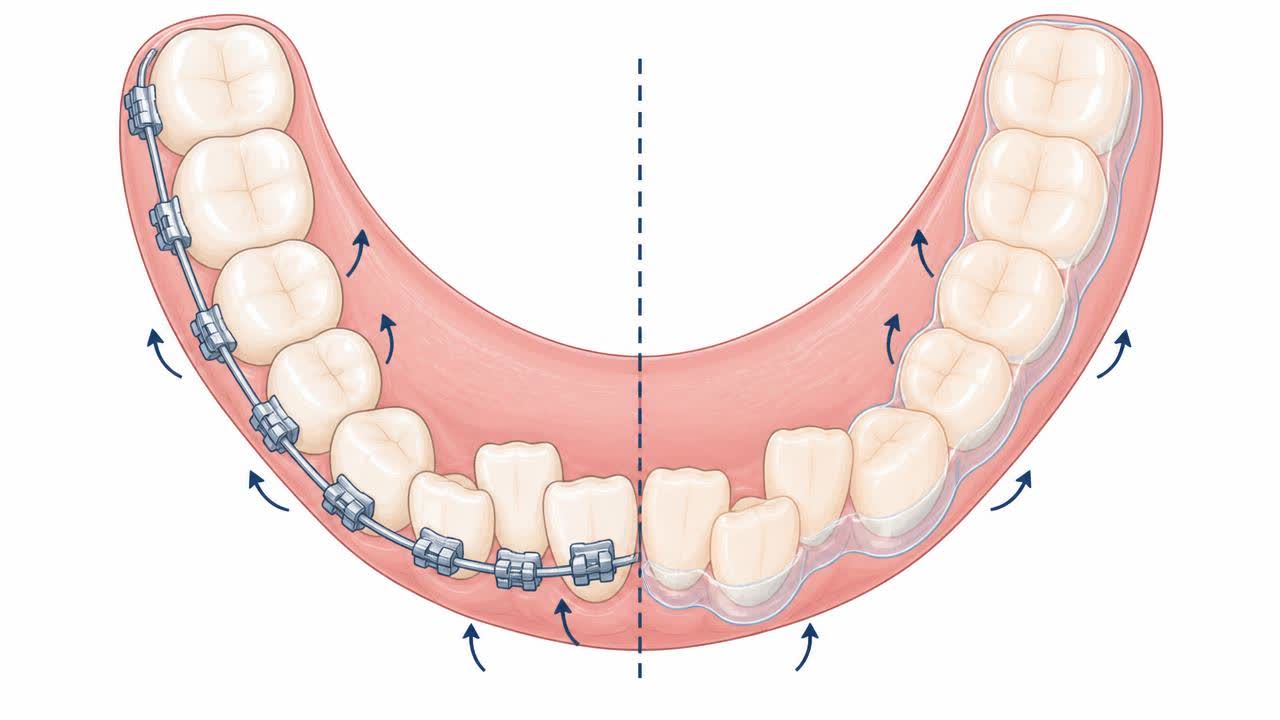
At a glance
- Moving to a new city, changing jobs, or simply seeking a different approach are common reasons for wanting to change orthodontists mid-treatment.
- Once you have decided to switch, schedule a consultation with our orthodontists as soon as possible.
- Every orthodontist has their unique style, techniques, and preferred systems.
- Once the switch is complete, your focus remains on being a consistent, engaged patient.
- Choosing us as your new orthodontic team is a decision we take very seriously, and we are here to welcome you.
The Decision to Switch
Moving to a new city, changing jobs, or simply seeking a different approach are common reasons for wanting to change orthodontists mid-treatment. Whatever your reason, the transition needs to be managed carefully to ensure your treatment progress is not lost or delayed. At Dr. Amit Sharma Super Speciality Dental Hospital, we have assisted many patients in this situation, and our goal is to make the transfer as seamless and stress-free as possible.
The first and most important step is to gather all your records from your current clinician. This includes your original diagnosis, your full treatment plan, all X-rays, photos, and any progress reports. Having a complete history allows us to understand your case, evaluate where you currently are in your treatment, and devise a plan that picks up right where you left off, ensuring your results remain consistent and predictable.
Planning a Smooth Transition
Once you have decided to switch, schedule a consultation with our orthodontists as soon as possible. During this visit, we will perform a thorough assessment to understand your dental health, your treatment progress, and your ultimate goals. We then work with you to align your new treatment plan with your previous one, making any necessary adjustments to ensure that the transition to our care is safe, effective, and supports your overall smile goals.
We also coordinate with your previous clinician, if possible, to get a clear picture of the steps they have already taken. This collaborative approach is vital for ensuring no time is lost and that your treatment remains on a steady, forward-moving path. We pride ourselves on our professionalism and commitment to patient care, ensuring that you feel supported and informed throughout the entire transfer process, no matter the reason for your change.
Adapting to a New Approach
Every orthodontist has their unique style, techniques, and preferred systems. While you might be continuing the same general treatment goal, you may find that our approach to your care feels slightly different. This is normal and perfectly okay! We take the time to explain our methods, discuss any new recommendations, and ensure you feel confident and comfortable with the transition at every stage of the process.
We also take this opportunity to conduct a fresh, comprehensive evaluation of your teeth and jaw health. This allows us to ensure that the current treatment plan is still the most appropriate one for you, potentially introducing newer, more efficient techniques or making adjustments to ensure that your final result is the absolute best it can be. We are here to support you and ensure you reach your goals.
Staying on Track After the Switch
Once the switch is complete, your focus remains on being a consistent, engaged patient. Attend your new adjustment appointments as scheduled, follow all our hygiene guidance, and keep up with your wear-time commitments if you have clear aligners. By staying focused and compliant, you help us continue your treatment without any unnecessary delays, ensuring your smile's journey stays on the right path toward its final, beautiful result.
Our team at Dr. Amit Sharma Super Speciality Dental Hospital is here for you. We provide the expertise, support, and care you need to make your treatment journey a success. Don't worry about the transition—we have the experience to manage it smoothly. We are committed to your smile's health and beauty, and we are ready to work with you to ensure your treatment continues seamlessly under our expert care.
Your New Orthodontic Home
Choosing us as your new orthodontic team is a decision we take very seriously, and we are here to welcome you. Our mission is to provide you with the high-quality, professional, and patient-centred care you deserve, ensuring you reach your goals with total peace of mind. We look forward to meeting you, understanding your story, and helping you achieve the perfect, healthy, and functional smile you've always wanted.
Contact us today at 9314403502 to schedule your consultation and start your transfer. We will guide you through the process, answer all your questions, and ensure you feel completely at home with us. Your smile is a priority, and we are ready to help you continue your journey toward a healthier, more beautiful version of yourself under our professional, dedicated guidance.
Questions patients ask us
- How do I start the process of switching?
- Start by requesting a full set of your records from your current orthodontist, including X-rays, photos, and your treatment plan. Once you have those, schedule a consultation with us so we can review your case, assess your progress, and create a plan to continue your treatment under our care.
- Will my treatment timeline change?
- It is possible. Every orthodontist may have a slightly different approach or technique. We will evaluate your case thoroughly, and our goal is to ensure your treatment continues as efficiently and effectively as possible. We will give you a clear, updated estimate of your treatment timeline after our assessment.
- What if my new orthodontist uses a different system?
- We work with you to ensure that any change in system is smooth and does not compromise your results. We have extensive experience in many different orthodontic systems and techniques, and we will advise you on the best path to ensure your treatment remains consistent, safe, and effective for your long-term health.
- Is it expensive to switch?
- The costs of switching depend on the work already completed and what remains to be done. We will discuss all the financial details during your consultation, providing a transparent breakdown of your ongoing treatment costs so you know exactly what to expect. We focus on providing excellent value through high-quality care.
Sources and further reading
Guidance from professional and public health bodies. Clinical decisions here are made on your own examination and radiographs.
- 1.Orthodontic treatment and retention — patient resources — American Association of Orthodontists
- 2.Patient information leaflets on appliances and retention — British Orthodontic Society
- 3.Oral health — fact sheet and global status report — World Health Organization
- 4.Policy statements and oral health definitions — FDI World Dental Federation
- 5.Dental health — conditions, treatments and patient guidance — NHS (UK)
- 6.Systematic reviews of oral and dental interventions — Cochrane Oral Health
- 7.Regulatory framework and dental education standards in India — Dental Council of India
When to see us
Get examined without waiting if any of the following applies to you:
- A broken bracket, poking wire or appliance causing ulceration
- A tooth that becomes painful, loose or discoloured during treatment
- Jaw joint pain, locking or a bite that has changed suddenly
Get a written plan and cost before you commit
If this is what you are dealing with, the next step is a consultation with radiographs — orthodontics cases are seen by the specialist who handles that field. You get a written plan and staged cost before anything begins.
reception@dramitsharmahospital.comThis article is general education and does not replace an in-person examination, radiographs or a diagnosis by a qualified dentist.
Clinical terms in this article
Related in Orthodontics
Aligners and Braces: Choosing the Right Option
Metal, ceramic and clear aligner treatment compared, duration, visibility, cost and suitability.
Tooth Extraction for Braces or Severe Crowding Issues
Orthodontic extractions involve the planned removal of select teeth to resolve severe crowding, correct bimaxillary protrusion, and balance dentoalveolar proportions. This clinical guide details diagnostic indications, extraction patterns, procedural steps, recovery, risks, and evidence-based non-extraction alternatives.
Maxillary Osteotomy for Open Bite Alignment and Correction
Maxillary osteotomy for open bite corrects severe vertical skeletal discrepancies through surgical repositioning of the upper jaw. Combined with orthodontics, this procedure restores chewing function, improves speech articulation, and ensures long-term occlusal and facial stability.
Surgically Assisted Rapid Palatal Expansion for Adult Palate Widening
Surgically assisted rapid palatal expansion (SARPE) is a combined orthodontic and surgical treatment designed to correct severe transverse maxillary deficiency in skeletally mature adults, widening the narrow upper jaw to restore functional occlusion, stability, and airway volume.
Surgical Exposure and Bracket Bonding for Impacted Canine Teeth
This clinical guide details impacted canine exposure surgery and bracket bonding. It explains anatomical causes, CBCT diagnostic pathways, open versus closed surgical techniques, orthodontic traction mechanisms, recovery protocols, and evidence-based strategies to manage complications.
Overbite vs Overjet: Key Differences and Correction Methods
This clinical guide clarifies the distinction between overbite (vertical overlap) and overjet (horizontal protrusion). It examines their aetiology, diagnostic pathways, classification, and evidence-based orthodontic and surgical correction methods across paediatric and adult populations.