At a glance
- An overbite refers to the vertical overlap of the upper front teeth over the lower front teeth, and a small degree of overlap is actually normal and healthy.
- A significant overbite can contribute to uneven wear on the lower front teeth, as they repeatedly contact the upper teeth or palate during biting and chewing.
- In growing children, an overbite can sometimes be intercepted using functional appliances that encourage more favourable jaw growth, taking advantage of the natural development still occurring at this stage.
- Overbite correction with braces or aligners typically takes between twelve and twenty-four months, depending on severity, and often involves the use of small elastic bands stretched between the upper and lower arches to help…
Understanding Overbite
An overbite refers to the vertical overlap of the upper front teeth over the lower front teeth, and a small degree of overlap is actually normal and healthy. A problematic overbite occurs when this overlap becomes excessive, sometimes to the point where the lower front teeth are barely visible or even bite into the roof of the mouth or gum tissue behind the upper teeth.
Overbites can develop due to genetic factors affecting jaw size and shape, prolonged thumb-sucking or pacifier use in early childhood, or tongue-thrusting habits that place pressure on the front teeth over time. Understanding the underlying cause helps determine the most appropriate treatment approach for each patient.
Effects of an Untreated Overbite
A significant overbite can contribute to uneven wear on the lower front teeth, as they repeatedly contact the upper teeth or palate during biting and chewing. Over time, this can lead to notable enamel wear, sensitivity, and in some cases, chipping of the affected teeth.
Severe overbites are also associated with jaw joint discomfort in some patients, as well as difficulty with certain speech sounds and, in more pronounced cases, an impact on facial profile and self-confidence. Addressing an overbite is therefore often about both function and long-term dental health, not appearance alone.
Treatment Options by Age and Severity
In growing children, an overbite can sometimes be intercepted using functional appliances that encourage more favourable jaw growth, taking advantage of the natural development still occurring at this stage. This early intervention can reduce the severity of the correction needed once all permanent teeth have erupted.
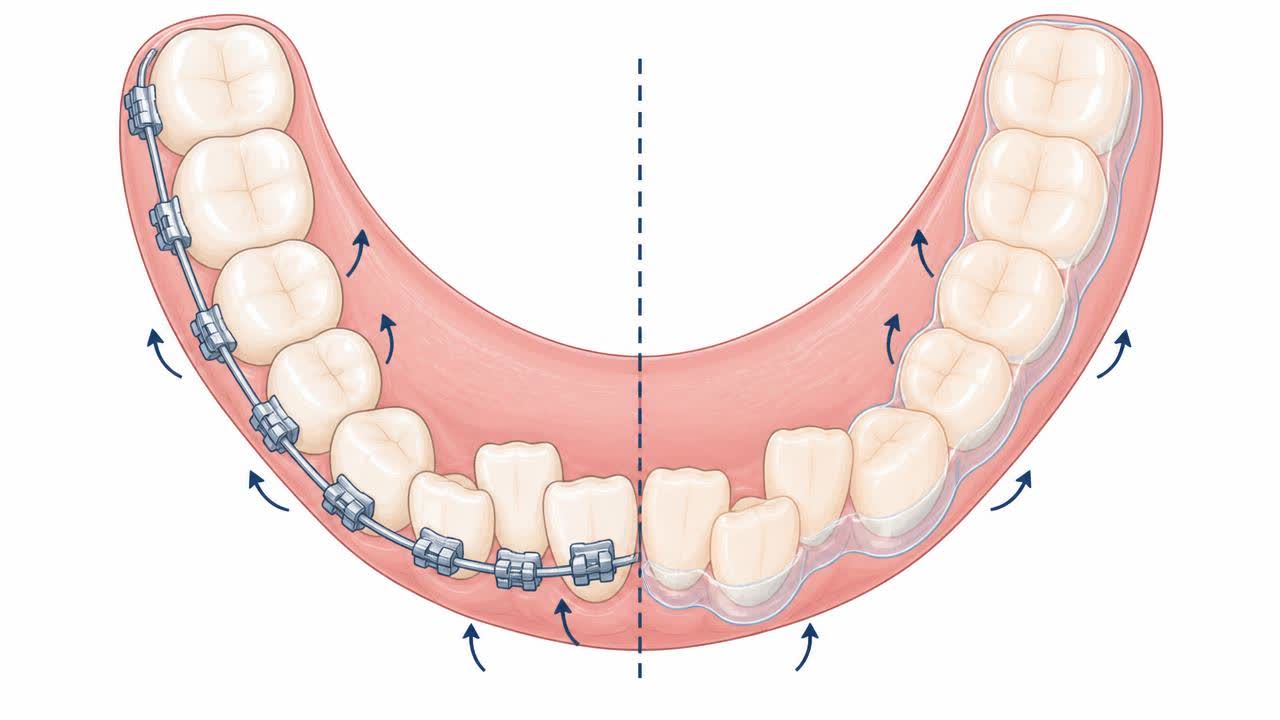
In teenagers and adults with fully developed jaws, braces or clear aligners are typically used to move the teeth into a more balanced bite relationship, sometimes combined with elastics that help guide the upper and lower jaws into better alignment relative to each other. Very severe skeletal overbites in adults, where the discrepancy lies in the jaw bones themselves rather than just tooth position, may require a combined orthodontic and surgical approach.
What to Expect During Treatment
Overbite correction with braces or aligners typically takes between twelve and twenty-four months, depending on severity, and often involves the use of small elastic bands stretched between the upper and lower arches to help correct the bite relationship. These elastics need to be worn consistently as instructed to achieve the planned movement efficiently.
Regular monitoring throughout treatment allows your orthodontist to track how well the bite is improving and make adjustments to elastic configurations or archwire shape as needed. Retention after treatment is particularly important for overbite cases, as the bite relationship can be prone to some relapse without consistent retainer wear.
Questions patients ask us
- How do I know if I have a problematic overbite?
- A dental examination is the most reliable way to assess overbite severity, as a small degree of overlap is normal. Signs of a problematic overbite can include the lower teeth being barely visible when biting together, or the lower teeth contacting the gum tissue behind the upper front teeth.
- Can an overbite be fixed without surgery?
- Most overbites, particularly those primarily involving tooth position rather than significant jaw discrepancy, can be effectively corrected using braces, aligners, and elastics without the need for surgery. Surgery is generally reserved for severe skeletal cases in fully grown adults.
- Is early treatment for overbites in children beneficial?
- Yes, in many cases, early interceptive treatment using functional appliances during a child's growth phase can guide the jaws into a more favourable relationship, potentially reducing the complexity of treatment needed later. An orthodontic evaluation around age seven can identify whether early intervention is appropriate.
- Do overbites cause jaw pain?
- A significant overbite can, in some patients, contribute to strain on the jaw joint due to an uneven bite relationship, potentially leading to discomfort or clicking. Correcting the bite through orthodontic treatment often helps alleviate these symptoms, though other factors can also contribute to jaw joint issues.
Sources and further reading
Guidance from professional and public health bodies. Clinical decisions here are made on your own examination and radiographs.
- 1.Orthodontic treatment and retention — patient resources — American Association of Orthodontists
- 2.Patient information leaflets on appliances and retention — British Orthodontic Society
- 3.Oral health — fact sheet and global status report — World Health Organization
- 4.Policy statements and oral health definitions — FDI World Dental Federation
- 5.Dental health — conditions, treatments and patient guidance — NHS (UK)
- 6.Systematic reviews of oral and dental interventions — Cochrane Oral Health
- 7.Regulatory framework and dental education standards in India — Dental Council of India
When to see us
Get examined without waiting if any of the following applies to you:
- A broken bracket, poking wire or appliance causing ulceration
- A tooth that becomes painful, loose or discoloured during treatment
- Jaw joint pain, locking or a bite that has changed suddenly
Get a written plan and cost before you commit
If this is what you are dealing with, the next step is a consultation with radiographs — orthodontics cases are seen by the specialist who handles that field. You get a written plan and staged cost before anything begins.
reception@dramitsharmahospital.comThis article is general education and does not replace an in-person examination, radiographs or a diagnosis by a qualified dentist.
Clinical terms in this article
Related in Orthodontics
Aligners and Braces: Choosing the Right Option
Metal, ceramic and clear aligner treatment compared, duration, visibility, cost and suitability.
Tooth Extraction for Braces or Severe Crowding Issues
Orthodontic extractions involve the planned removal of select teeth to resolve severe crowding, correct bimaxillary protrusion, and balance dentoalveolar proportions. This clinical guide details diagnostic indications, extraction patterns, procedural steps, recovery, risks, and evidence-based non-extraction alternatives.
Maxillary Osteotomy for Open Bite Alignment and Correction
Maxillary osteotomy for open bite corrects severe vertical skeletal discrepancies through surgical repositioning of the upper jaw. Combined with orthodontics, this procedure restores chewing function, improves speech articulation, and ensures long-term occlusal and facial stability.
Surgically Assisted Rapid Palatal Expansion for Adult Palate Widening
Surgically assisted rapid palatal expansion (SARPE) is a combined orthodontic and surgical treatment designed to correct severe transverse maxillary deficiency in skeletally mature adults, widening the narrow upper jaw to restore functional occlusion, stability, and airway volume.
Surgical Exposure and Bracket Bonding for Impacted Canine Teeth
This clinical guide details impacted canine exposure surgery and bracket bonding. It explains anatomical causes, CBCT diagnostic pathways, open versus closed surgical techniques, orthodontic traction mechanisms, recovery protocols, and evidence-based strategies to manage complications.
Overbite vs Overjet: Key Differences and Correction Methods
This clinical guide clarifies the distinction between overbite (vertical overlap) and overjet (horizontal protrusion). It examines their aetiology, diagnostic pathways, classification, and evidence-based orthodontic and surgical correction methods across paediatric and adult populations.