At a glance
- When a tooth is lost, the surrounding bone that once supported its root begins to gradually resorb over time if not stimulated by chewing forces or a replacement root.
- Grafting material can come from several sources: the patient's own bone harvested from another site in the mouth, processed bone from a human or animal donor source, or synthetic bone substitutes engineered to encourage the…
- Bone grafting is usually performed under local anaesthesia and can be done either as a standalone procedure or combined with implant placement itself, depending on how much bone is missing.
- Yes, in most cases bone grafting adds several months to the overall implant timeline, since the graft needs time to mature into stable bone before an implant can be placed safely.
Why Bone Grafting Is Sometimes Necessary
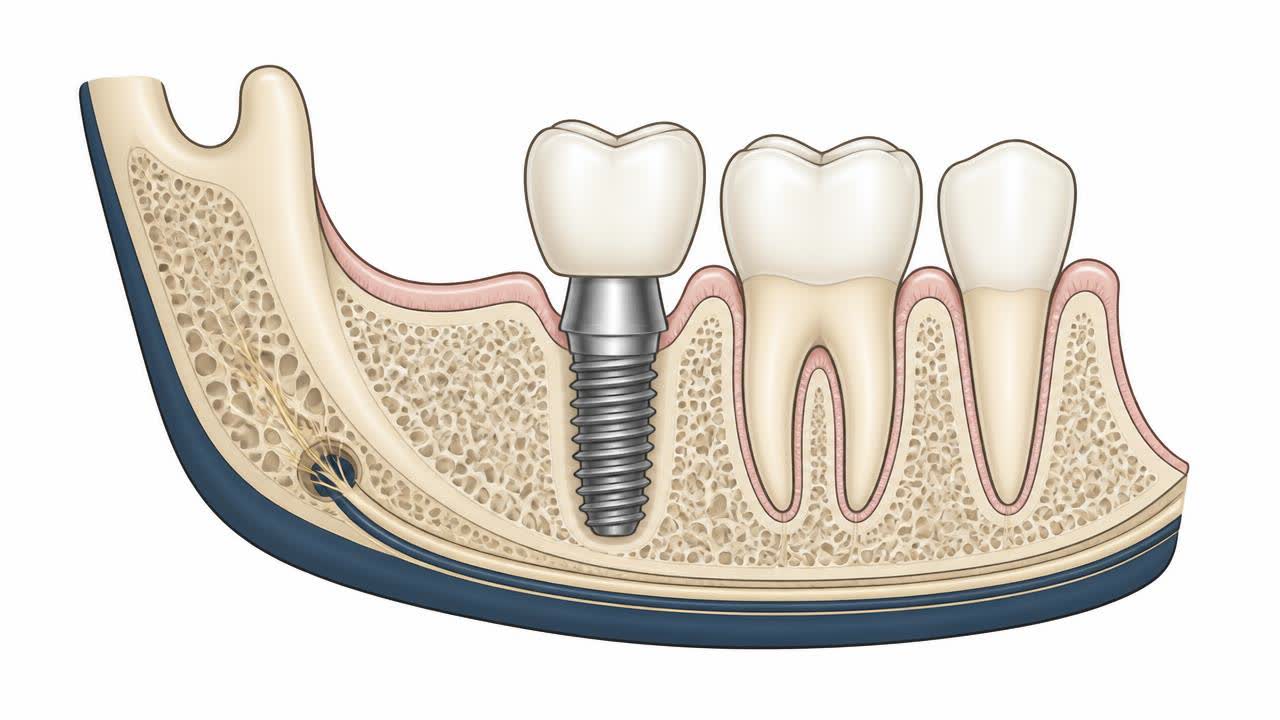
When a tooth is lost, the surrounding bone that once supported its root begins to gradually resorb over time if not stimulated by chewing forces or a replacement root. After months or years without a tooth, the remaining bone may be too thin or too short to safely anchor an implant.
Bone grafting adds volume and density to the site, creating a stable foundation for implant placement. Without it, an implant placed into insufficient bone risks poor integration, instability, or exposure of the implant surface through thin gum tissue over time.
Types of Bone Grafts Used
Grafting material can come from several sources: the patient's own bone harvested from another site in the mouth, processed bone from a human or animal donor source, or synthetic bone substitutes engineered to encourage the body's own bone-forming cells to regenerate the area.
The choice of graft material depends on the size of the defect, the location in the mouth, and the surgeon's clinical judgement. Smaller defects may use synthetic granules mixed with a resorbable membrane, while larger defects sometimes require block grafts for structural support.
The Grafting Procedure and Healing
Bone grafting is usually performed under local anaesthesia and can be done either as a standalone procedure or combined with implant placement itself, depending on how much bone is missing. Minor grafts often heal alongside the implant, while larger grafts typically require several months of healing before an implant can be placed.
During healing, the grafted area gradually matures as your own bone cells grow into and around the graft material, eventually forming solid, living bone capable of supporting an implant. Following post-operative instructions carefully, including avoiding pressure on the site, is important for a predictable outcome.
Does Grafting Delay Treatment
Yes, in most cases bone grafting adds several months to the overall implant timeline, since the graft needs time to mature into stable bone before an implant can be placed safely. This can feel frustrating for patients eager to complete treatment quickly.
However, this additional time is a worthwhile investment, as placing an implant into inadequate bone significantly increases the risk of long-term failure. Our team will always explain honestly if grafting is required and outline a realistic timeline before proceeding.
Questions patients ask us
- Is bone grafting painful?
- Bone grafting is performed under local anaesthesia so the procedure itself is not painful. Mild swelling and tenderness for several days afterwards is normal and manageable with standard pain relief and cold compresses as advised by your dentist.
- How do I know if I need bone grafting?
- A CBCT scan taken as part of your implant assessment will clearly show the available bone volume at the intended implant site. If the bone is insufficient, your dentist will discuss grafting options with you before finalising your treatment plan.
- Can grafting fail?
- While uncommon, graft failure can occur, particularly in smokers, patients with uncontrolled diabetes, or if post-operative instructions are not followed carefully. Choosing an experienced surgical team and maintaining good oral hygiene significantly reduces this risk.
- Will I need my own bone taken from elsewhere?
- Not necessarily. Many grafting procedures use donor or synthetic bone substitutes that work very well and avoid a second surgical site. Your own bone may be recommended for larger defects requiring maximum regenerative potential.
Sources and further reading
Guidance from professional and public health bodies. Clinical decisions here are made on your own examination and radiographs.
- 1.ITI Treatment Guide series and consensus statements — International Team for Implantology (ITI)
- 2.Consensus reports on implant dentistry — European Association for Osseointegration
- 3.Prosthodontic and edentulous-care patient guidance — American College of Prosthodontists
- 4.Oral health — fact sheet and global status report — World Health Organization
- 5.Policy statements and oral health definitions — FDI World Dental Federation
- 6.Dental health — conditions, treatments and patient guidance — NHS (UK)
- 7.Systematic reviews of oral and dental interventions — Cochrane Oral Health
- 8.Regulatory framework and dental education standards in India — Dental Council of India
When to see us
Get examined without waiting if any of the following applies to you:
- Pain, looseness or pus around an implant or a fixed bridge
- A crown, bridge or denture that has fractured or come away
- Gum swelling that keeps returning around the same restoration
Get a written plan and cost before you commit
If this is what you are dealing with, the next step is a consultation with radiographs — implants & missing teeth cases are seen by the specialist who handles that field. You get a written plan and staged cost before anything begins.
reception@dramitsharmahospital.comThis article is general education and does not replace an in-person examination, radiographs or a diagnosis by a qualified dentist.
Clinical terms in this article
Related in Implants & Missing Teeth
Missing Teeth: Comparing Dentures, Bridges and Implant Options
What happens if a missing tooth is left unreplaced, and how dentures, bridges and implants compare on comfort, longevity and bone health.
Dental Implants: A Complete Guide
How titanium implants replace missing teeth, who qualifies, the step-by-step timeline and how long they last.
Full Mouth Rehabilitation
Rebuilding a worn, collapsed or heavily damaged dentition with a sequenced, whole-mouth treatment plan.
Peri-Implant Mucositis Symptoms and Early Intervention
Peri-implant mucositis is a plaque-induced, reversible inflammatory lesion affecting the soft tissues surrounding a dental implant without bone loss. Prompt professional debridement, risk-factor modification, and meticulous biofilm control prevent progression to irreversible peri-implantitis.
Peri-Implantitis Symptoms Bone Loss and Implant Salvage
Peri-implantitis is an inflammatory condition causing progressive marginal bone loss around dental implants. Early detection, thorough decontamination, and advanced surgical salvage techniques can arrest bone destruction, resolve inflammation, and preserve implant stability.
Root Canal Retreatment vs Tooth Extraction and Implant
This clinical guide evaluates root canal retreatment versus tooth extraction and dental implant placement. Learn about biological tooth preservation, anatomical considerations, procedural steps, longevity, recovery expectations, and diagnostic criteria to make an informed oral healthcare decision.