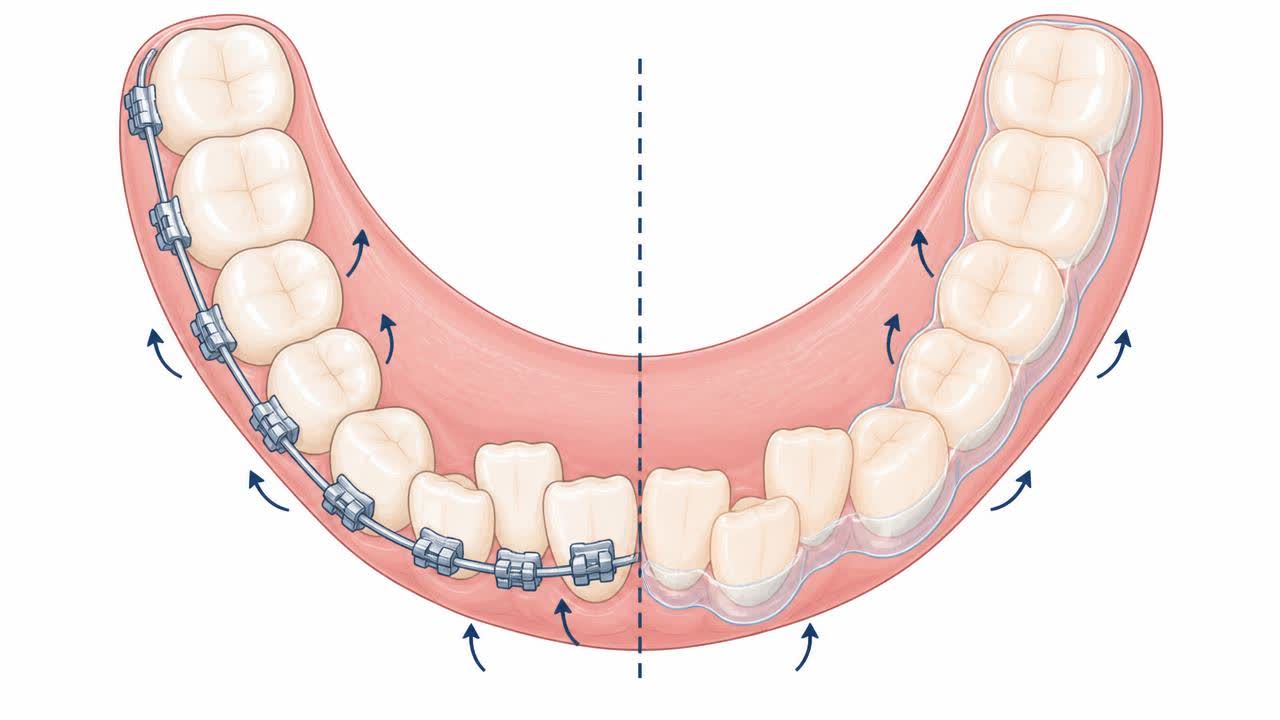
At a glance
- Retainers are the essential final step of your orthodontic treatment.
- Caring for your retainers is simple but requires consistency.
- Even with excellent care, retainers can wear out or become damaged over time.
- Beyond regular care, protect your retainer by keeping it in its case when you're not wearing it and away from pets who might find it appealing.
- Dr.
Why Your Retainer Matters
Retainers are the essential final step of your orthodontic treatment. They hold your teeth in their new, straight positions while the bone and gums adapt, preventing the natural tendency for teeth to shift back to their original alignment. By consistently wearing your retainer as prescribed, you protect your investment in your smile, ensuring your results remain beautiful, stable, and perfectly aligned for the many years to come.
At Dr. Amit Sharma Super Speciality Dental Hospital, we want your smile to stay perfect for a lifetime. We provide you with comprehensive guidance on how to care for your retainers, ensuring they remain clean, effective, and comfortable. Our team is always here to answer your questions and provide the expert support you need to make retainer wear a natural and simple part of your daily routine for your long-term dental health.
Daily Care and Cleaning
Caring for your retainers is simple but requires consistency. For removable retainers, clean them gently every day using a soft toothbrush and mild soap or a designated cleaning solution. Avoid using hot water, as this can warp the retainer and affect its fit. For fixed retainers, brush and floss around the wire carefully, using specialised tools to ensure that plaque doesn't build up, which could affect your gum health.
Our specialists in Jaipur provide all the tips and techniques you need to keep your retainers in great shape. By making retainer cleaning a daily habit, you ensure they remain hygienic, fresh, and comfortable for your teeth. We believe that with simple, daily attention, your retainers will be an easy and effective part of your routine for maintaining the beautiful, straight results of your orthodontic treatment over the long term.
When to Replace Your Retainer
Even with excellent care, retainers can wear out or become damaged over time. You should contact us for a replacement if your retainer cracks, warps, loses its shape, or no longer fits snugly against your teeth. A worn-out or ill-fitting retainer won't hold your teeth correctly, which could lead to unwanted shifting. Regular check-ups allow us to monitor your retainer's condition and ensure it's still doing its job.
Our team is ready to help you with quick, professional replacements whenever needed. We keep track of your progress and are always available to help you keep your smile perfect. Don't wait until your teeth start shifting; if you notice any issues with your retainer, please reach out to us. We will ensure you receive a new, perfectly fitted retainer that keeps your smile stable, beautiful, and straight for years.
Protecting Your Smile Long-term
Beyond regular care, protect your retainer by keeping it in its case when you're not wearing it and away from pets who might find it appealing. Consistent, diligent care and wearing your retainer as prescribed are the best ways to ensure your orthodontic success. We are dedicated to providing the ongoing support and expert guidance you need to keep your smile looking as amazing as it did the day your braces were removed.
We offer regular follow-up appointments to check both your retainer and the stability of your alignment. We are committed to your long-term results, ensuring that your beautiful, straight smile remains as stable, healthy, and functional as it was when your treatment ended. By partnering with us, you can be confident that you are getting the best care to protect your investment in your smile and your long-term oral health.
Expert Orthodontic Support in Jaipur
Dr. Amit Sharma Super Speciality Dental Hospital is committed to excellence in every phase of your orthodontic treatment, including long-term retention. Our specialists provide clear, expert advice on the best care for your retainers, ensuring they remain effective and your smile stays perfect for the long term. We are dedicated to your satisfaction and long-term oral health, helping you protect your beautiful, well-aligned, and healthy smile for your entire lifetime.
If you have questions about your retainers or need a replacement, we invite you to book an appointment at our Jaipur clinic. Our team is ready to assess your needs and provide the expert care required to maintain your results. Please reach out to our team at our helpline at 9314403502 to learn more about our comprehensive dental services and schedule your appointment today.
Questions patients ask us
- How should I clean my removable retainer?
- Clean your removable retainer daily using a soft-bristled toothbrush and a small amount of mild, non-abrasive soap or a specialist retainer cleaning tablet. Rinse it thoroughly with cool, clean water. Avoid using hot water, which can damage the plastic, and avoid abrasive toothpaste, which can scratch the retainer's surface, making it easier for bacteria to build up.
- What should I do if my retainer doesn't fit?
- If your retainer feels tight or doesn't fit correctly, it is a sign that your teeth may have begun to shift. Do not try to force the retainer into place, as this can damage the retainer or your teeth. Contact our clinic immediately so we can assess your situation and provide a replacement or adjustment, ensuring your teeth stay in their optimal, healthy positions.
- How often should I replace my retainer?
- Retainers typically last several years with proper care, but they will eventually wear out, stretch, or become damaged, at which point they must be replaced. We monitor your retainer at every check-up and will let you know when it needs to be replaced to ensure it continues to provide the necessary support for your stable, beautiful, and perfectly aligned smile.
- What happens if I lose my retainer?
- If you lose your retainer, contact us right away. Teeth can shift surprisingly quickly without their retainer. We can arrange to have a new one made for you immediately to prevent any unnecessary movement and to keep your smile stable. Your immediate action is the best way to protect the investment you've made in your beautiful, well-aligned, and healthy smile.
Sources and further reading
Guidance from professional and public health bodies. Clinical decisions here are made on your own examination and radiographs.
- 1.Orthodontic treatment and retention — patient resources — American Association of Orthodontists
- 2.Patient information leaflets on appliances and retention — British Orthodontic Society
- 3.Oral health — fact sheet and global status report — World Health Organization
- 4.Policy statements and oral health definitions — FDI World Dental Federation
- 5.Dental health — conditions, treatments and patient guidance — NHS (UK)
- 6.Systematic reviews of oral and dental interventions — Cochrane Oral Health
- 7.Regulatory framework and dental education standards in India — Dental Council of India
When to see us
Get examined without waiting if any of the following applies to you:
- A broken bracket, poking wire or appliance causing ulceration
- A tooth that becomes painful, loose or discoloured during treatment
- Jaw joint pain, locking or a bite that has changed suddenly
Get a written plan and cost before you commit
If this is what you are dealing with, the next step is a consultation with radiographs — orthodontics cases are seen by the specialist who handles that field. You get a written plan and staged cost before anything begins.
reception@dramitsharmahospital.comThis article is general education and does not replace an in-person examination, radiographs or a diagnosis by a qualified dentist.
Clinical terms in this article
Related in Orthodontics
Aligners and Braces: Choosing the Right Option
Metal, ceramic and clear aligner treatment compared, duration, visibility, cost and suitability.
Tooth Extraction for Braces or Severe Crowding Issues
Orthodontic extractions involve the planned removal of select teeth to resolve severe crowding, correct bimaxillary protrusion, and balance dentoalveolar proportions. This clinical guide details diagnostic indications, extraction patterns, procedural steps, recovery, risks, and evidence-based non-extraction alternatives.
Maxillary Osteotomy for Open Bite Alignment and Correction
Maxillary osteotomy for open bite corrects severe vertical skeletal discrepancies through surgical repositioning of the upper jaw. Combined with orthodontics, this procedure restores chewing function, improves speech articulation, and ensures long-term occlusal and facial stability.
Surgically Assisted Rapid Palatal Expansion for Adult Palate Widening
Surgically assisted rapid palatal expansion (SARPE) is a combined orthodontic and surgical treatment designed to correct severe transverse maxillary deficiency in skeletally mature adults, widening the narrow upper jaw to restore functional occlusion, stability, and airway volume.
Surgical Exposure and Bracket Bonding for Impacted Canine Teeth
This clinical guide details impacted canine exposure surgery and bracket bonding. It explains anatomical causes, CBCT diagnostic pathways, open versus closed surgical techniques, orthodontic traction mechanisms, recovery protocols, and evidence-based strategies to manage complications.
Overbite vs Overjet: Key Differences and Correction Methods
This clinical guide clarifies the distinction between overbite (vertical overlap) and overjet (horizontal protrusion). It examines their aetiology, diagnostic pathways, classification, and evidence-based orthodontic and surgical correction methods across paediatric and adult populations.