At a glance
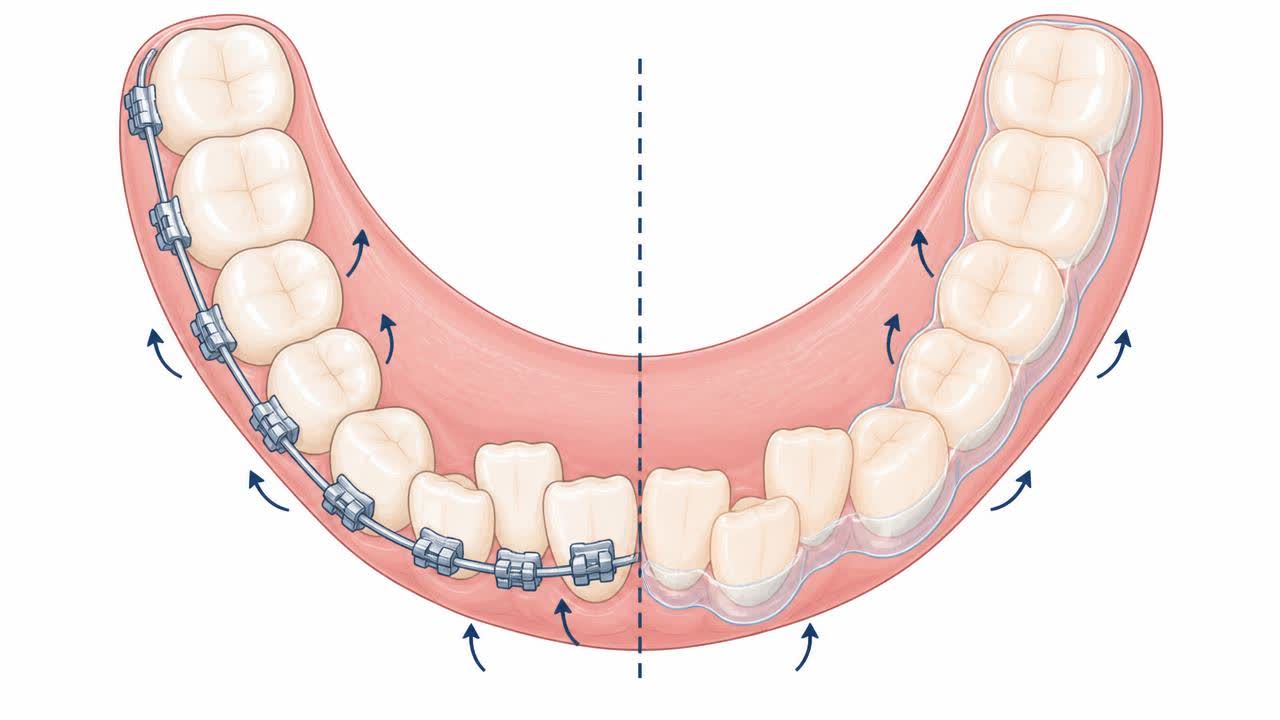
- Fixed orthodontic appliances, such as brackets and archwires, are engineered to align individual teeth within a single dental arch.
- An ideal bite, or physiological occlusion, requires the upper and lower teeth to interdigitate precisely, distributing masticatory forces evenly across the periodontium and temporomandibular joints (TMJ).
- Orthodontic elastics are classified according to the clinical direction of the force vector they produce.
- Before prescribing orthodontic elastics, an orthodontist conducts a comprehensive assessment using clinical examination, digital study models, and specialised radiographic imaging.
- Orthodontic elastics are the most common tool for bite correction due to their versatility, low cost, and minimal chairside emergency rates.
Introduction to Orthodontic Elastics and Biomechanical Principles
Fixed orthodontic appliances, such as brackets and archwires, are engineered to align individual teeth within a single dental arch. However, archwires alone cannot efficiently move the upper and lower jaws relative to one another. The primary rubber bands on braces purpose is to provide intermaxillary traction—a continuous, directional force that connects anchor points on the maxillary (upper) and mandibular (lower) arches. This force vector shifts the bite into a harmonious, functional relationship.
Orthodontic elastics are manufactured from medical-grade natural latex or synthetic polymers. When stretched between designated bracket hooks, these bands store potential mechanical energy and release it as a sustained light force. This physiological force stimulates bone remodelling in the alveolar process, allowing controlled tooth movement and minor skeletal adaptation. Without the inter-arch force provided by rubber bands, resolving significant bite misalignments such as overjets, underbites, and crossbites remains biologically impossible with standard fixed appliances alone.
Malocclusion and the Functional Anatomy of the Bite
An ideal bite, or physiological occlusion, requires the upper and lower teeth to interdigitate precisely, distributing masticatory forces evenly across the periodontium and temporomandibular joints (TMJ). Malocclusion occurs across three spatial planes: sagittal (front-to-back), vertical (up-and-down), and transverse (side-to-side). When the maxilla and mandible do not align, abnormal mechanical forces are transmitted to the teeth, alveolar bone, masticatory muscles, and the articular disc of the TMJ.
Bite discrepancies can stem from dental malposition, skeletal discrepancies in jaw size or position, or harmful oral habits such as tongue thrusting and prolonged pacifier use. In certain demographics, dietary factors or habits like chronic betel nut chewing and tobacco use can further complicate occlusal wear and periodontal stability. If left uncorrected, malocclusions can lead to premature dental attrition, periodontal breakdown, impaired chewing efficiency, speech articulation difficulties, and myofascial pain disorders.
When to Seek Urgent Orthodontic Assessment (Red Flags)
While mild soreness and minor elastic breakage are routine, certain clinical signs require prompt professional evaluation. Severe, throbbing pain that fails to respond to standard analgesia, sudden inability to close the jaw, or painful clicking, popping, and locking of the temporomandibular joint are significant red flags that necessitate immediate clinical review.
Patients experiencing acute mucosal swelling, persistent ulceration, or signs of an allergic reaction—such as oral itching or swelling associated with natural latex elastics—must contact their orthodontic clinic immediately. In such cases, elastics should be paused until the clinician can substitute them with non-latex synthetic polymer alternatives. Similarly, if a bracket hook breaks or an attachment debonds, professional repair is required to avoid unilateral force imbalances.
Classification of Orthodontic Rubber Bands and Force Vectors
Orthodontic elastics are classified according to the clinical direction of the force vector they produce. Class II elastics typically run from the maxillary canine bracket to the mandibular first molar. This pulls the upper anterior teeth posteriorly and pushes the lower dentition anteriorly, correcting a Class II malocclusion (overjet or 'buck teeth'). Conversely, Class III elastics run from the mandibular canine to the maxillary first molar, pulling the lower arch back and the upper arch forward to correct an underbite.
Vertical and detailing configurations address other spatial planes. Crossbite elastics run from the lingual (tongue side) of an upper tooth to the buccal (cheek side) of a lower tooth to correct transverse deviations. Box or triangular elastics apply vertical vectors across specific anterior or posterior teeth to resolve anterior open bites (where front teeth do not overlap) or to interlock the occlusal cusps during the final detailing stages of orthodontic treatment.
Clinical Diagnosis and Treatment Planning for Elastic Traction
Before prescribing orthodontic elastics, an orthodontist conducts a comprehensive assessment using clinical examination, digital study models, and specialised radiographic imaging. Lateral cephalometric radiographs are essential for evaluating the relationship between the cranial base, maxilla, and mandible. Cephalometric tracing identifies whether a bite problem is purely dentoalveolar (tooth-based) or skeletal, which determines whether intermaxillary elastics alone will suffice or if surgical intervention is indicated.
Diagnostic workups also include panoramic radiographs to assess root morphology, alveolar bone levels, and the position of unerupted teeth. Cone-beam computed tomography (CBCT) may be indicated in complex cases involving impacted teeth or significant craniofacial asymmetry. The clinician assesses the health of the periodontium and the temporomandibular joint, ensuring that force application will not exacerbate pre-existing joint pathology or cause adverse periodontal recession.
Clinical Comparison: Elastics Versus Other Intermaxillary Appliances
Orthodontic elastics are the most common tool for bite correction due to their versatility, low cost, and minimal chairside emergency rates. However, they rely entirely on patient compliance. In non-compliant patients or severe skeletal discrepancies, clinicians may consider fixed functional appliances such as Forsus springs or Herbst appliances. While fixed devices do not depend on patient memory, they are bulkier, more prone to mechanical breakage, and significantly more expensive.
For complex tooth movements requiring absolute anchorage without reactive reciprocal movement on neighbouring teeth, temporary anchorage devices (TADs) or mini-screws can be placed directly into the cortical bone. In mature patients with severe skeletal discrepancies beyond the scope of orthodontic camouflage, orthognathic (jaw) surgery remains the definitive treatment modality. Elastics are nonetheless widely favoured as the least invasive, highly adjustable first-line modality for moderate sagittal and vertical corrections.
Step-by-Step Guide: How Rubber Bands Are Fitted and Managed Daily
During the orthodontic appointment, the clinician identifies the specific teeth requiring elastic engagement and demonstrates the precise attachment points on the bracket hooks. Patients are given an initial supply of elastics labelled with a specific diameter (such as 1/4 or 3/16 inch) and force level (light, medium, or heavy). Patients practise placing the elastics in front of a clinical mirror using their fingers or an elastic applicator tool until they can consistently replicate the vector.
Daily management requires strict discipline. Elastics lose their elasticity and force delivery over several hours due to saliva exposure and mechanical stretching during speech and yawning. Patients must change their elastics three to four times each day—typically after meals and before sleep. Except when eating meals or performing oral hygiene, elastics must be worn continuously for 20 to 22 hours per day to maintain steady biological forces on the alveolar bone.
Adaptation, Discomfort, and What to Expect During Elastic Wear
When first starting intermaxillary elastics, mild tooth soreness, tenderness upon chewing, and slight jaw muscle fatigue are expected physiological responses. The continuous tension compresses the periodontal ligament (PDL), temporarily reducing local blood flow and releasing biochemical mediators (such as prostaglandins) that initiate bone remodelling. This discomfort typically peaks between 24 and 48 hours and subsides significantly within three to five days as the tissues adapt.
Mild transient tooth mobility is normal during this active phase, as the periodontal ligament space widens slightly to accommodate movement. Over-the-counter analgesics such as paracetamol can manage initial tenderness. It is critical that patients do not remove their elastics to relieve discomfort; doing so restarts the inflammatory cycle every time the elastics are re-applied, prolonging pain and stalling dental progress.
Potential Complications and Risks of Non-Compliance
Inconsistent wear is the primary cause of prolonged orthodontic treatment times. Wearing elastics intermittently produces a destructive 'round-tripping' effect, where teeth move forward and backward repeatedly. This chronic, fluctuating force increases the risk of external apical root resorption (shortening of the tooth root tips) and can cause progressive alveolar bone loss around heavily stressed teeth.
Incorrect placement—such as attaching the elastic to the wrong bracket hook—can introduce unintended force vectors. This can lead to unwanted tooth extrusion, bite cants (tilting of the occlusal plane), or worsening of the malocclusion. Furthermore, non-compliance can cause anchorage loss, pulling anchor teeth out of their ideal positions within the jaw and complicating subsequent treatment stages.
Retention, Post-Treatment Stability, and Long-Term Care
Once intermaxillary elastics have successfully corrected the bite, the orthodontist transitions the patient into a finishing and detailing phase to settle the occlusion. Following appliance debonding, retention is essential to maintain structural stability. Periodontal and gingival fibres retain a 'memory' of their original positions and require months to reorganise around the newly aligned teeth.
Retention protocols typically involve custom-fitted vacuum-formed (Essix) retainers, Hawley retainers, or fixed bonded lingual retention wires. Patients must follow their prescribed retainer wear schedule strictly, as minor relapse in tooth position can compromise the corrected bite relationship over time. Regular follow-up reviews ensure that occlusal contacts remain stable and that no unwanted functional shifts occur.
Evidence and further reading
The biomechanics of intermaxillary elastics and their clinical efficacy are well documented across international orthodontic literature. Authoritative bodies, including the British Orthodontic Society (BOS), the American Association of Orthodontists (AAO), and the European Orthodontic Society (EOS), consistently emphasise that light, continuous forces produce optimal biological tooth movement while minimising the risk of root resorption.
Systematic reviews by the Cochrane Oral Health Group and clinical trials published in leading peer-reviewed journals, such as the *American Journal of Orthodontics and Dentofacial Orthopedics* and the *Journal of Orthodontics*, demonstrate that patient compliance is the single greatest determinant of treatment success with removable intermaxillary elastics. Clinicians are guided by these evidence-based standards to design force systems that balance clinical efficiency with long-term periodontal and joint health.
Questions patients ask us
- Why are rubber bands necessary if I already have brackets and wires?
- Brackets and archwires align individual teeth within an arch, but they cannot effectively pull the upper and lower jaws toward each other. Rubber bands provide the necessary directional, inter-arch force to shift the overall bite into correct alignment, resolving overjets, underbites, and open bites.
- How many hours a day do I need to wear my orthodontic rubber bands?
- Orthodontic rubber bands generally need to be worn for 20 to 22 hours per day. They should only be removed for meals and thorough oral hygiene. Wearing them less frequently prevents continuous cellular bone remodelling, significantly delaying your overall treatment progress.
- Can I double up on rubber bands to make my teeth move faster?
- No, doubling up elastics applies excessive, uncalibrated force to the teeth and bone. This excessive pressure can cause severe pain, damage the periodontal ligament, lead to root resorption, and cause anchor teeth to move in unintended directions, ultimately prolonging treatment.
- What happens if I forget to wear my rubber bands for a few days?
- Failing to wear elastics allows teeth to drift back toward their original misaligned positions. This introduces a 'round-tripping' effect where teeth move back and forth, stalling clinical progress, increasing the risk of root damage, and lengthening your total time in braces.
- Can I eat or drink while wearing orthodontic elastics?
- You can drink water with elastics in place, but you should remove them before eating meals or snacks. Chewing food with elastics can snap the bands, dislodge bracket hooks, and introduce food debris into the traction points. Always replace them with fresh bands after eating.
- How often should I change my rubber bands for new ones?
- Orthodontic elastics should be replaced with fresh bands three to four times per day. The elastic material degrades, stretches, and loses mechanical tension within a few hours due to saliva and mouth movement, making regular replacement essential for consistent force.
- Are there non-latex options for patients with latex allergies?
- Yes, orthodontic manufacturers produce high-grade synthetic polymer elastics specifically for individuals with latex allergies. If you experience oral irritation, itching, or swelling, inform your orthodontist immediately so they can transition your care to non-latex alternatives.
- Why do my teeth feel slightly loose or sore when using elastics?
- Mild mobility and soreness are normal signs that the elastics are working. The force widens the periodontal ligament space slightly and activates bone remodelling cells around the tooth roots. This tenderness usually subsides within three to five days as your mouth adapts.
Sources and further reading
Guidance from professional and public health bodies. Clinical decisions here are made on your own examination and radiographs.
- 1.Orthodontic treatment and retention — patient resources — American Association of Orthodontists
- 2.Patient information leaflets on appliances and retention — British Orthodontic Society
- 3.Oral health — fact sheet and global status report — World Health Organization
- 4.Policy statements and oral health definitions — FDI World Dental Federation
- 5.Dental health — conditions, treatments and patient guidance — NHS (UK)
- 6.Systematic reviews of oral and dental interventions — Cochrane Oral Health
- 7.Regulatory framework and dental education standards in India — Dental Council of India
When to see us
Get examined without waiting if any of the following applies to you:
- A broken bracket, poking wire or appliance causing ulceration
- A tooth that becomes painful, loose or discoloured during treatment
- Jaw joint pain, locking or a bite that has changed suddenly
Get a written plan and cost before you commit
If this is what you are dealing with, the next step is a consultation with radiographs — orthodontics cases are seen by the specialist who handles that field. You get a written plan and staged cost before anything begins.
reception@dramitsharmahospital.comThis article is general education and does not replace an in-person examination, radiographs or a diagnosis by a qualified dentist.
Clinical terms in this article
Related in Orthodontics
Aligners and Braces: Choosing the Right Option
Metal, ceramic and clear aligner treatment compared, duration, visibility, cost and suitability.
Tooth Extraction for Braces or Severe Crowding Issues
Orthodontic extractions involve the planned removal of select teeth to resolve severe crowding, correct bimaxillary protrusion, and balance dentoalveolar proportions. This clinical guide details diagnostic indications, extraction patterns, procedural steps, recovery, risks, and evidence-based non-extraction alternatives.
Maxillary Osteotomy for Open Bite Alignment and Correction
Maxillary osteotomy for open bite corrects severe vertical skeletal discrepancies through surgical repositioning of the upper jaw. Combined with orthodontics, this procedure restores chewing function, improves speech articulation, and ensures long-term occlusal and facial stability.
Surgically Assisted Rapid Palatal Expansion for Adult Palate Widening
Surgically assisted rapid palatal expansion (SARPE) is a combined orthodontic and surgical treatment designed to correct severe transverse maxillary deficiency in skeletally mature adults, widening the narrow upper jaw to restore functional occlusion, stability, and airway volume.
Surgical Exposure and Bracket Bonding for Impacted Canine Teeth
This clinical guide details impacted canine exposure surgery and bracket bonding. It explains anatomical causes, CBCT diagnostic pathways, open versus closed surgical techniques, orthodontic traction mechanisms, recovery protocols, and evidence-based strategies to manage complications.
Overbite vs Overjet: Key Differences and Correction Methods
This clinical guide clarifies the distinction between overbite (vertical overlap) and overjet (horizontal protrusion). It examines their aetiology, diagnostic pathways, classification, and evidence-based orthodontic and surgical correction methods across paediatric and adult populations.