At a glance
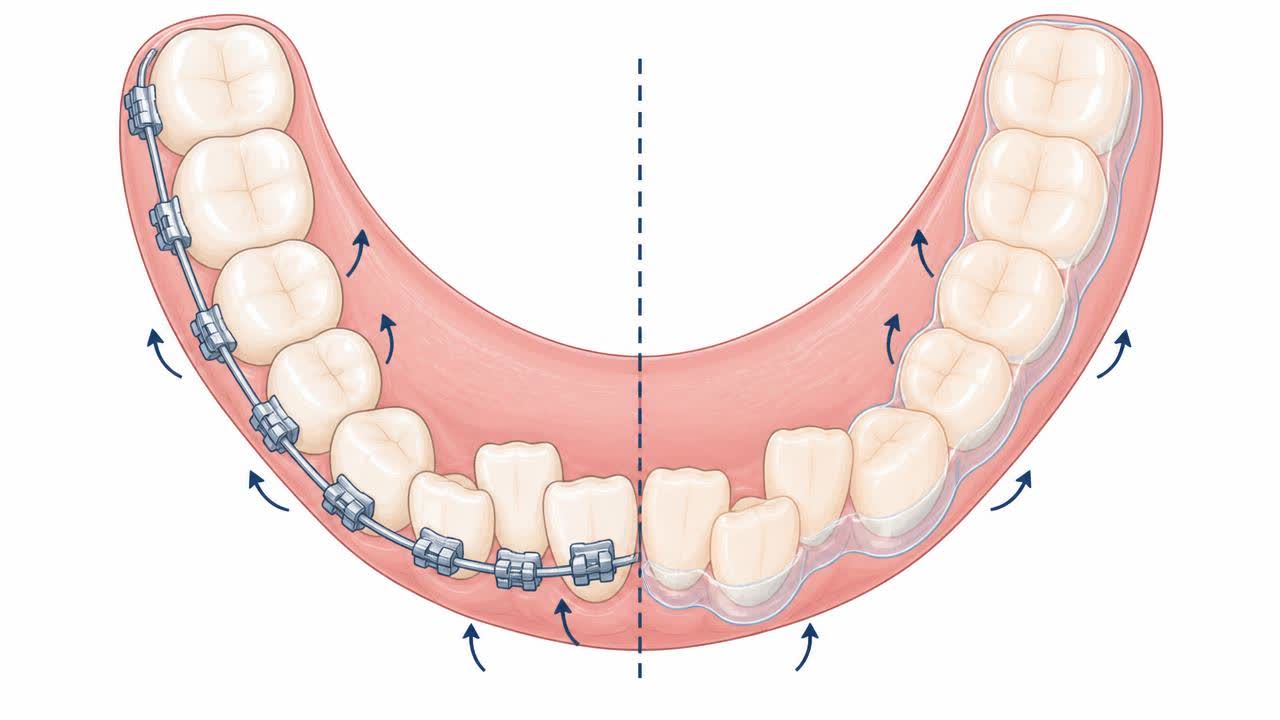
- Braces and, to a lesser extent, aligners create additional surfaces and small gaps where food particles and plaque can become trapped more easily than around naturally aligned, unobstructed teeth.
- When brushing with fixed braces, angle the bristles both above and below each bracket to clean the areas where the bracket meets the tooth surface, since plaque tends to accumulate most heavily in these junctions.
- Traditional flossing is more challenging with fixed braces because the wire blocks the floss from passing directly between teeth in the usual way.
- Because aligners are removable, you should brush and floss your teeth thoroughly before reinserting each tray, ideally after every meal or snack, to prevent food particles and bacteria from being trapped against your teeth for…
- Reducing frequent snacking, particularly on sugary or starchy foods, helps limit the number of times your teeth are exposed to the acid produced by bacteria feeding on food debris throughout the day.
Why Hygiene Matters More During Treatment
Braces and, to a lesser extent, aligners create additional surfaces and small gaps where food particles and plaque can become trapped more easily than around naturally aligned, unobstructed teeth. If not managed carefully, this can lead to visible white or brown decay spots around the brackets, known as demineralisation, as well as increased gum inflammation throughout treatment.
Because orthodontic treatment often lasts a year or more, even small daily lapses in hygiene can accumulate into significant problems by the time the appliance is removed. Establishing a thorough and consistent routine from the very first week of treatment makes a substantial difference to your long-term oral health and the appearance of your teeth once treatment is complete.
Brushing Technique for Fixed Braces
When brushing with fixed braces, angle the bristles both above and below each bracket to clean the areas where the bracket meets the tooth surface, since plaque tends to accumulate most heavily in these junctions. Take extra time around each tooth rather than rushing through a standard two-minute brushing routine, as the additional surfaces created by the brackets require more thorough attention than usual.
An interdental brush, small enough to fit under the archwire, is invaluable for cleaning between brackets and around the gumline where a standard toothbrush cannot reach effectively. Using this tool daily, in addition to regular brushing, significantly reduces plaque buildup in the hard-to-reach areas around your braces.
Flossing with Braces
Traditional flossing is more challenging with fixed braces because the wire blocks the floss from passing directly between teeth in the usual way. Floss threaders, which help guide the floss under the archwire before it is pulled through between the teeth, make this process manageable, though it does take more time and patience than flossing without an appliance.
Water flossers offer an alternative that many patients with braces find easier and quicker to use daily, directing a stream of water between teeth and around brackets to dislodge trapped food and plaque. While not a complete replacement for mechanical cleaning with floss or interdental brushes, a water flosser can be a valuable addition to your daily routine during orthodontic treatment.
Cleaning Aligners and the Teeth Beneath Them
Because aligners are removable, you should brush and floss your teeth thoroughly before reinserting each tray, ideally after every meal or snack, to prevent food particles and bacteria from being trapped against your teeth for extended periods. This is one of the significant hygiene advantages of aligner treatment compared to fixed braces.
The aligners themselves also need daily cleaning using a soft toothbrush and lukewarm water, or a dedicated cleaning solution, to prevent a buildup of plaque and bacteria on the plastic surface, which can otherwise contribute to bad breath and an increased risk of decay against the teeth.
Dietary Habits That Support Good Hygiene
Reducing frequent snacking, particularly on sugary or starchy foods, helps limit the number of times your teeth are exposed to the acid produced by bacteria feeding on food debris throughout the day. This is especially relevant during orthodontic treatment, when the additional surfaces of brackets or the closed environment beneath aligners can prolong this exposure if snacking is frequent.
Drinking plenty of water throughout the day, particularly after meals when brushing is not immediately possible, helps rinse away food particles and reduce the acidity in the mouth. Scheduling regular professional cleanings with our hygiene team throughout your orthodontic treatment also provides an important extra layer of plaque and tartar removal that home care alone cannot always achieve.
Questions patients ask us
- How often should I brush my teeth while wearing braces?
- Brushing after every meal or snack is ideal during orthodontic treatment, given the additional food-trapping surfaces created by the brackets and wires. At a minimum, thorough brushing morning and night, combined with interdental cleaning, is essential to prevent decay and gum inflammation around the appliance.
- What white or brown spots might appear near my brackets mean?
- These marks often indicate early demineralisation of the enamel, caused by plaque accumulation around the brackets over time. This is a sign that hygiene needs to be improved promptly, as continued plaque buildup in these areas can progress towards actual decay if not addressed.
- Is a water flosser enough to keep my braces clean?
- A water flosser is a helpful addition to your routine but works best alongside, rather than instead of, thorough brushing and interdental brushing or floss threading. Combining these methods provides the most comprehensive removal of plaque and food debris around brackets and wires.
- How often should I see the hygienist during orthodontic treatment?
- Most patients benefit from professional cleanings every three to six months during orthodontic treatment, though your specific interval may be adjusted based on how well you are managing home care. Regular hygiene visits provide an important safety net alongside your daily brushing and cleaning routine.
Sources and further reading
Guidance from professional and public health bodies. Clinical decisions here are made on your own examination and radiographs.
- 1.Orthodontic treatment and retention — patient resources — American Association of Orthodontists
- 2.Patient information leaflets on appliances and retention — British Orthodontic Society
- 3.Oral health — fact sheet and global status report — World Health Organization
- 4.Policy statements and oral health definitions — FDI World Dental Federation
- 5.Dental health — conditions, treatments and patient guidance — NHS (UK)
- 6.Systematic reviews of oral and dental interventions — Cochrane Oral Health
- 7.Regulatory framework and dental education standards in India — Dental Council of India
When to see us
Get examined without waiting if any of the following applies to you:
- A broken bracket, poking wire or appliance causing ulceration
- A tooth that becomes painful, loose or discoloured during treatment
- Jaw joint pain, locking or a bite that has changed suddenly
Get a written plan and cost before you commit
If this is what you are dealing with, the next step is a consultation with radiographs — orthodontics cases are seen by the specialist who handles that field. You get a written plan and staged cost before anything begins.
reception@dramitsharmahospital.comThis article is general education and does not replace an in-person examination, radiographs or a diagnosis by a qualified dentist.
Clinical terms in this article
Related in Orthodontics
Aligners and Braces: Choosing the Right Option
Metal, ceramic and clear aligner treatment compared, duration, visibility, cost and suitability.
Tooth Extraction for Braces or Severe Crowding Issues
Orthodontic extractions involve the planned removal of select teeth to resolve severe crowding, correct bimaxillary protrusion, and balance dentoalveolar proportions. This clinical guide details diagnostic indications, extraction patterns, procedural steps, recovery, risks, and evidence-based non-extraction alternatives.
Maxillary Osteotomy for Open Bite Alignment and Correction
Maxillary osteotomy for open bite corrects severe vertical skeletal discrepancies through surgical repositioning of the upper jaw. Combined with orthodontics, this procedure restores chewing function, improves speech articulation, and ensures long-term occlusal and facial stability.
Surgically Assisted Rapid Palatal Expansion for Adult Palate Widening
Surgically assisted rapid palatal expansion (SARPE) is a combined orthodontic and surgical treatment designed to correct severe transverse maxillary deficiency in skeletally mature adults, widening the narrow upper jaw to restore functional occlusion, stability, and airway volume.
Surgical Exposure and Bracket Bonding for Impacted Canine Teeth
This clinical guide details impacted canine exposure surgery and bracket bonding. It explains anatomical causes, CBCT diagnostic pathways, open versus closed surgical techniques, orthodontic traction mechanisms, recovery protocols, and evidence-based strategies to manage complications.
Overbite vs Overjet: Key Differences and Correction Methods
This clinical guide clarifies the distinction between overbite (vertical overlap) and overjet (horizontal protrusion). It examines their aetiology, diagnostic pathways, classification, and evidence-based orthodontic and surgical correction methods across paediatric and adult populations.