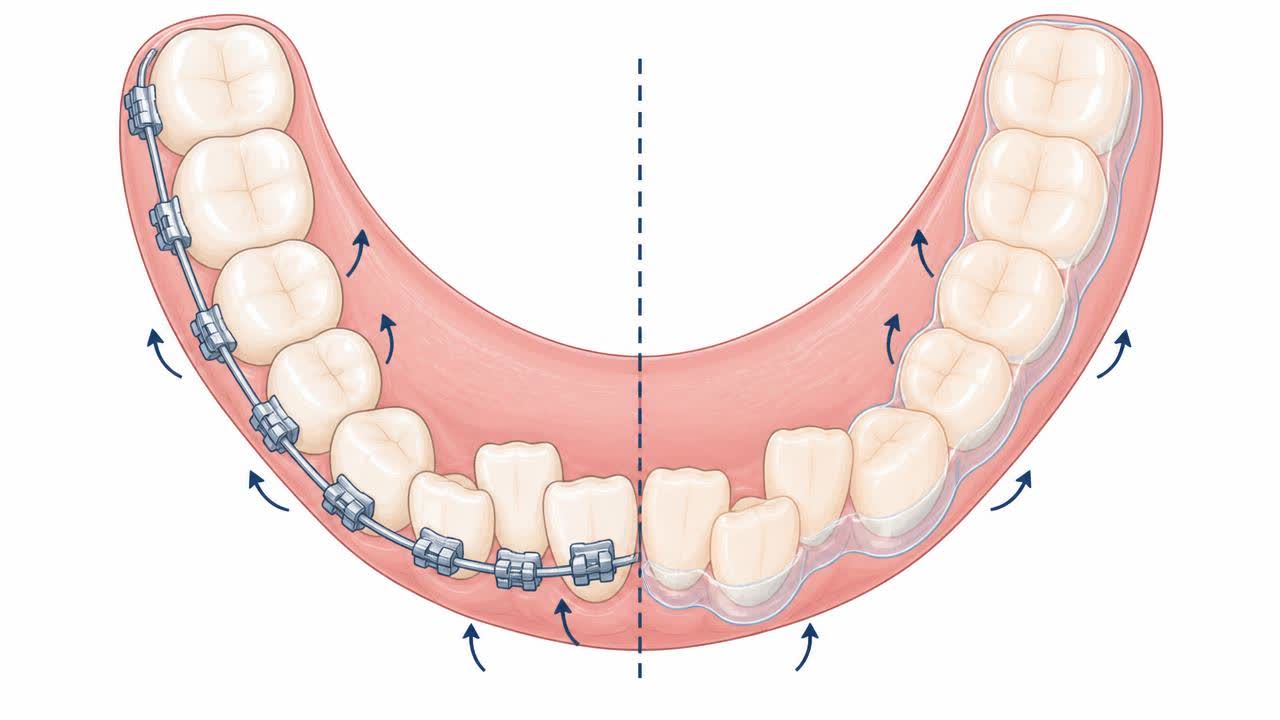
At a glance
- The foundation of every clear aligner treatment at Dr.
- Once we have your digital model, we use it to create a detailed, step-by-step simulation of your teeth moving from their current position to your planned, ideal smile.
- This digital planning allows us to maintain exceptional control over your treatment.
- Because your entire treatment is digital, we can track your progress at every single check-up appointment.
- Digital planning is the secret to a modern, comfortable, and successful orthodontic experience.
The Power of 3D Digital Imaging
The foundation of every clear aligner treatment at Dr. Amit Sharma Super Speciality Dental Hospital is our advanced 3D digital imaging. Instead of uncomfortable, traditional moulds, we use precise scanners to create a highly accurate, digital map of your entire dental anatomy. This model is the perfect starting point, allowing us to see every detail of your teeth, bite, and jaw structure.
This technology isn't just for planning; it is the core of our precision. By having a perfect digital replica of your mouth, we can use our sophisticated software to simulate the exact, planned movement of each individual tooth throughout your entire treatment journey. This is how we ensure that your smile is transformed with the highest level of care, predictability, and accuracy possible today.
Simulating Your Perfect Smile
Once we have your digital model, we use it to create a detailed, step-by-step simulation of your teeth moving from their current position to your planned, ideal smile. This virtual plan is like a GPS for your orthodontic treatment. We can see how each tooth will rotate, tilt, or shift, and we can adjust the plan to achieve the exact aesthetic results you are looking for.
The best part is that you can see this simulation too! During your consultation, we can show you the projected final result of your treatment. It is an incredibly powerful and exciting way to understand the path to your new smile and feel confident in the process. It helps you see clearly what is possible, making your orthodontic journey a collaborative and deeply rewarding experience.
Precision, Predictability, and Control
This digital planning allows us to maintain exceptional control over your treatment. We don't just 'hope' your teeth will move in the right direction; we plan the forces required for each stage, calculate the movement of each tooth, and refine the path to perfection. This precision means that each of your aligner trays is designed to perform a specific, incremental, and highly effective movement.
The result is a treatment plan that is far more predictable than traditional, less advanced methods. Because we have mapped everything out in such detail, we can anticipate potential challenges, plan for supplemental features like attachments, and ensure your treatment is both efficient and gentle. Your path to a better smile is meticulously designed by our team to be as successful as possible.
Monitoring Your Progress
Because your entire treatment is digital, we can track your progress at every single check-up appointment. We verify that each of your teeth is tracking along the planned, digital path. If we notice that one tooth isn't moving quite as expected, we can adjust your plan and make the necessary tweaks to get you back on track quickly and efficiently.
This level of monitoring is only possible with digital planning. It gives us the ability to be proactive, ensuring your treatment stays on course from start to finish. We are always working to ensure your results are the best they can possibly be, and this digital precision allows us to deliver the high-quality, personalised care you deserve throughout your entire journey to a straighter, healthier smile.
Your Journey to Success
Digital planning is the secret to a modern, comfortable, and successful orthodontic experience. It transforms your treatment from a process of guessing to one of precision, giving you the best possible outcome. By starting with this advanced, digital approach, we are setting you up for success and ensuring your transformation is as smooth, efficient, and enjoyable as we can make it.
We are proud to use the latest technology to help you reach your goals. We want you to feel confident in the process, excited about your final results, and happy with the care you receive. Your journey to a perfect smile starts here with a digital plan that is uniquely yours, and we are thrilled to be the ones helping you bring that vision to life.
Questions patients ask us
- Is digital simulation accurate?
- Yes, it is highly accurate. It is based on a precise 3D scan of your teeth, which allows our software to simulate tooth movement with a high degree of precision, resulting in a very reliable treatment plan.
- Can I change the goal of my simulation?
- During the planning phase, we discuss your goals and expectations. We can make adjustments to the plan based on your desires, ensuring that the final outcome is exactly what you want to achieve for your smile.
- How does this make my treatment better?
- Digital planning provides predictability, control, and efficiency. It allows us to design a tailored roadmap for your teeth, which means fewer surprises, a more efficient treatment timeline, and a final result that is truly refined.
- Does this mean I don't need check-ups?
- Not at all. Regular check-ups are essential. They allow us to monitor your progress against the digital plan, ensure your teeth are tracking perfectly, and make any necessary adjustments to keep your treatment on schedule.
Sources and further reading
Guidance from professional and public health bodies. Clinical decisions here are made on your own examination and radiographs.
- 1.Orthodontic treatment and retention — patient resources — American Association of Orthodontists
- 2.Patient information leaflets on appliances and retention — British Orthodontic Society
- 3.Oral health — fact sheet and global status report — World Health Organization
- 4.Policy statements and oral health definitions — FDI World Dental Federation
- 5.Dental health — conditions, treatments and patient guidance — NHS (UK)
- 6.Systematic reviews of oral and dental interventions — Cochrane Oral Health
- 7.Regulatory framework and dental education standards in India — Dental Council of India
When to see us
Get examined without waiting if any of the following applies to you:
- A broken bracket, poking wire or appliance causing ulceration
- A tooth that becomes painful, loose or discoloured during treatment
- Jaw joint pain, locking or a bite that has changed suddenly
Get a written plan and cost before you commit
If this is what you are dealing with, the next step is a consultation with radiographs — orthodontics cases are seen by the specialist who handles that field. You get a written plan and staged cost before anything begins.
reception@dramitsharmahospital.comThis article is general education and does not replace an in-person examination, radiographs or a diagnosis by a qualified dentist.
Clinical terms in this article
Related in Orthodontics
Aligners and Braces: Choosing the Right Option
Metal, ceramic and clear aligner treatment compared, duration, visibility, cost and suitability.
Tooth Extraction for Braces or Severe Crowding Issues
Orthodontic extractions involve the planned removal of select teeth to resolve severe crowding, correct bimaxillary protrusion, and balance dentoalveolar proportions. This clinical guide details diagnostic indications, extraction patterns, procedural steps, recovery, risks, and evidence-based non-extraction alternatives.
Maxillary Osteotomy for Open Bite Alignment and Correction
Maxillary osteotomy for open bite corrects severe vertical skeletal discrepancies through surgical repositioning of the upper jaw. Combined with orthodontics, this procedure restores chewing function, improves speech articulation, and ensures long-term occlusal and facial stability.
Surgically Assisted Rapid Palatal Expansion for Adult Palate Widening
Surgically assisted rapid palatal expansion (SARPE) is a combined orthodontic and surgical treatment designed to correct severe transverse maxillary deficiency in skeletally mature adults, widening the narrow upper jaw to restore functional occlusion, stability, and airway volume.
Surgical Exposure and Bracket Bonding for Impacted Canine Teeth
This clinical guide details impacted canine exposure surgery and bracket bonding. It explains anatomical causes, CBCT diagnostic pathways, open versus closed surgical techniques, orthodontic traction mechanisms, recovery protocols, and evidence-based strategies to manage complications.
Overbite vs Overjet: Key Differences and Correction Methods
This clinical guide clarifies the distinction between overbite (vertical overlap) and overjet (horizontal protrusion). It examines their aetiology, diagnostic pathways, classification, and evidence-based orthodontic and surgical correction methods across paediatric and adult populations.